
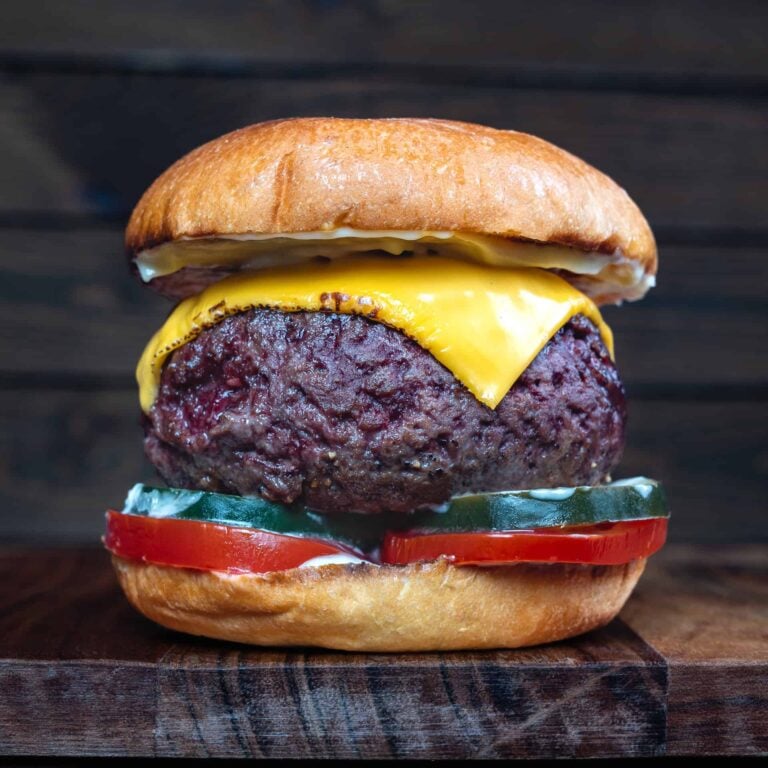
What’s better than a venison burger? If you’re the kind of person who believes a deer burger should taste like venison, this Venison Burger Recipe is for you. These venison burgers are designed to work with any type of venison you have on hand.
What you get is an 8-ounce patty about an inch thick, chilled so it holds together without a binder, and seared in a cast-iron skillet or on the grill. They are pulled at 130–145°F so they come off juicy rather than dry and pale gray all the way through.

Quick Look: Venison Burger Recipe
- Ready in: 30 minutes hands-on; 2 hours 15 minutes total (with optional 1 hour chill and 45 minutes at room temperature before cooking)
- Serves: Makes 2, 8-ounce burgers
- Calories: 592 per burger
- Main ingredients: Ground venison, kosher salt, black pepper, and olive oil
- Cooking method: Pan-sear or grill
- Why this version works: A thick patty builds a crust before the lean center overcooks, a chill in the fridge binds it without fillers, and pulling at 130–145°F is what keeps it juicy.
SUMMARIZE & SAVE THIS CONTENT ON
Most venison burger recipes are on the cusp of making deer meat taste less like deer. Adding ingredients such as bacon, crackers, or Worcestershire diminishes the burger’s flavor and puts it on the verge of becoming venison meatloaf. I understand the thought of doing this. A lean patty cooked like a beef patty is dry, crumbly, and, should I say, completely disappointing. Adding fat may seem like the easy fix, but you don’t always have that option.
I’ve made deer burgers more ways than I can count, and the version below is what I’ve landed on. My method works no matter what fat content is in your grind. So if you have a mystery pack from your processor, don’t worry, I’ve got you covered. You’re no longer stuck with making things like venison casserole or venison sloppy joes.
It comes down to three things: a patty thick enough to form a crust before the center overcooks, a chill in the fridge that lets the meat bind, and a thermometer.
Looking for more ways to cook up the 2026 season’s deer harvest? Check out my ground deer meat recipes collection where you’ll find reader favorites like these deer Swedish meatballs.
Why This Recipe Works
- Shapes burgers thicker. An 8-ounce, 1-inch-thick patty lets the outside brown before the center passes a medium internal temperature.
- Refrigerate before cooking. Chilling lets the myosin bind the patties, so you don’t need crackers, breadcrumbs, or fillers to hold them together.
- Set at room temperature after the chill. Just as you would with a prime venison loin steak, allowing the burgers to sit at room temperature before cooking improves their cooking and prevents a seared outer crust with a cold center.
This also helps minimize burger shrinkage. Ever seen a hockey puck burger? Chances are, the burger was extremely cold when it was placed over the heat source. - Cooked just right. Pulling the patties at 130–145°F is the entire difference between a juicy lean burger and a dry one.
Notes on Ingredients
See the recipe card for full information on ingredients and quantities.
- Ground Venison: This recipe was designed to work with pure venison with no added fat, or with fat added. If you’re grinding venison at home, choose cuts low in connective tissue, such as top round, bottom round, or backstrap if you’re feeling fancy.
They give you a clean, meaty flavor and a patty that sears beautifully. Keep the shanks, neck, and heavily sinewed trim out of this particular grind and save them for venison chili and braises, where slow heat can break them down. - Olive Oil: Added to the skillet for cooking. It keeps the meat from sticking and aids in browning.
- Optional Baste: Add butter, fresh garlic, and thyme or rosemary to the skillet while cooking for added flavor. It’s not required, but it’s a nice way to infuse more flavor and finish your venison burgers.
Already have pork or beef fat in your grind?
Most deer that come back from a processor are ground with 10–20% pork or beef fat, which works fine here. The fat provides a buffer in this recipe. So you can loosen a few of my rules up.
- You can go thinner. The 8-ounce, 1-inch patty exists to protect a pure-venison grind from overcooking. With fat in the grind, quarter- or third-pound patties hold their moisture just fine, just like in these Oklahoma burgers.
- You can cook them further. Pull a fatty grind at 145–150°F instead of 130–145°F, and it’ll still be juicy. This also lets you cook them to 160°F without ruining the meat. But when cooking to 160°F, I highly recommend my basting technique provided.
- You can shorten the chill. Fat helps the patty hold together, so 20–30 minutes in the fridge is usually enough, rather than the full 1–2 hours. Don’t skip it entirely, as cold meat can still shrink and may be harder to sear.
- One thing that doesn’t change: Don’t overwork the meat, and still cook to temperature rather than time. You can get away with that with a loco moco burger, but not here.
Substitutions and Additions
- Grilled vs. cast iron. Cast iron gives you an even, edge-to-edge crust and the option to baste directly in the pan. A grill gives you smoke and char, but the crust isn’t as pronounced. If it’s your first time cooking a thick lean patty, start in the skillet as it’s the easier method.
- Add toppings: A pure-venison patty pairs well with richness because it lacks fat. Add crispy bacon and a slice of American or Swiss in the last minute. Cheddar cheese is a little stronger, but it’s excellent with deer burgers.
- Swap in elk, moose, or antelope. Use the same method, same patty size, and same pull temperatures. All three are just as lean as whitetail or mule deer. Antelope is extremely lean and has a more distinct flavor, in my opinion, so my cooking techniques are perfect for it.
How To Make Venison Burgers
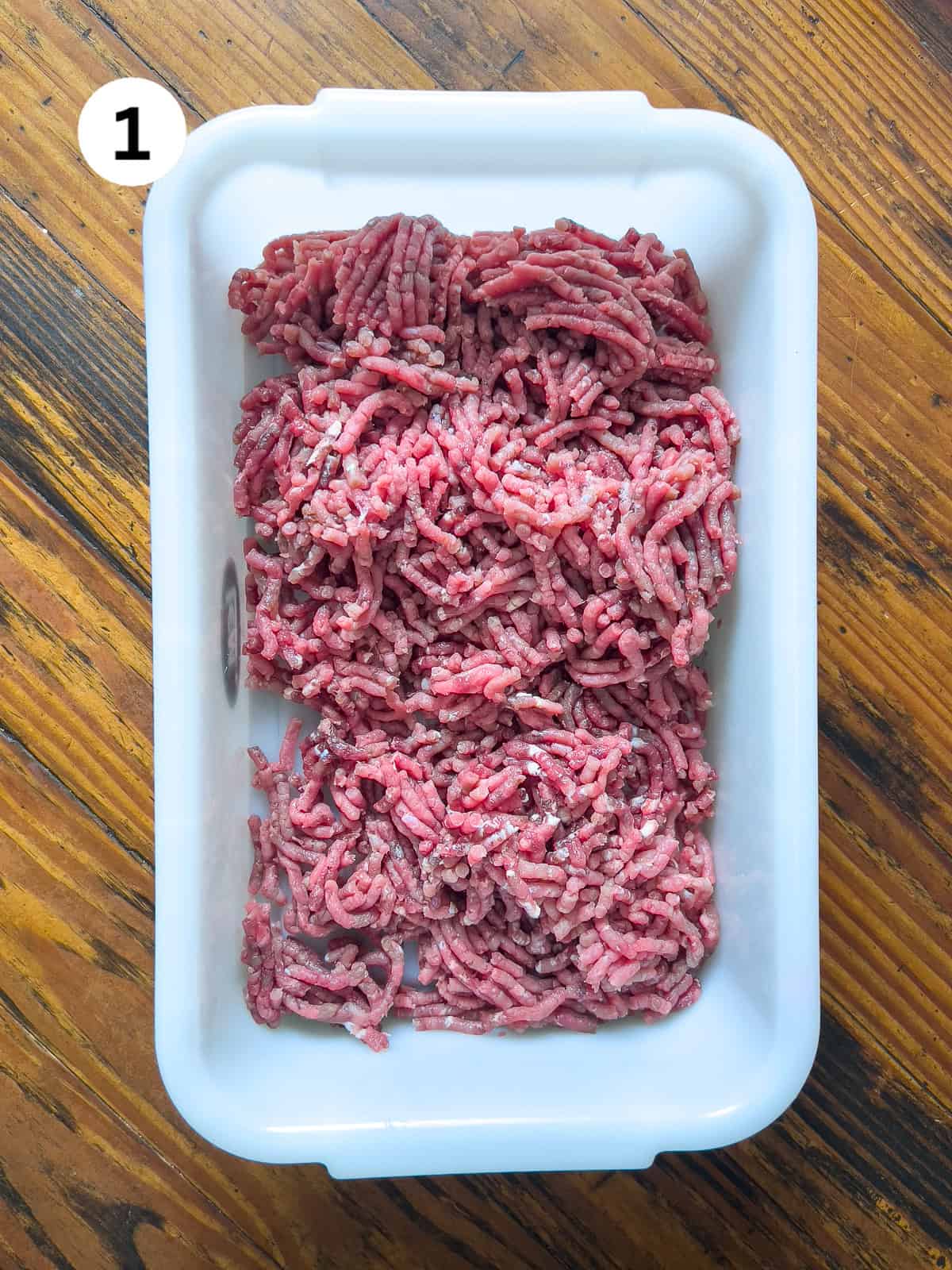
1. Season and lightly mix. Place the ground venison into a large bowl or small food safe meat lug.
Add a small amount of salt and pepper to flavor the meat because we’re going to lightly season the patties again after they’re shaped, so you don’t need too much.
Mix the seasoning into the meat. Just enough to incorporate it without overworking it.
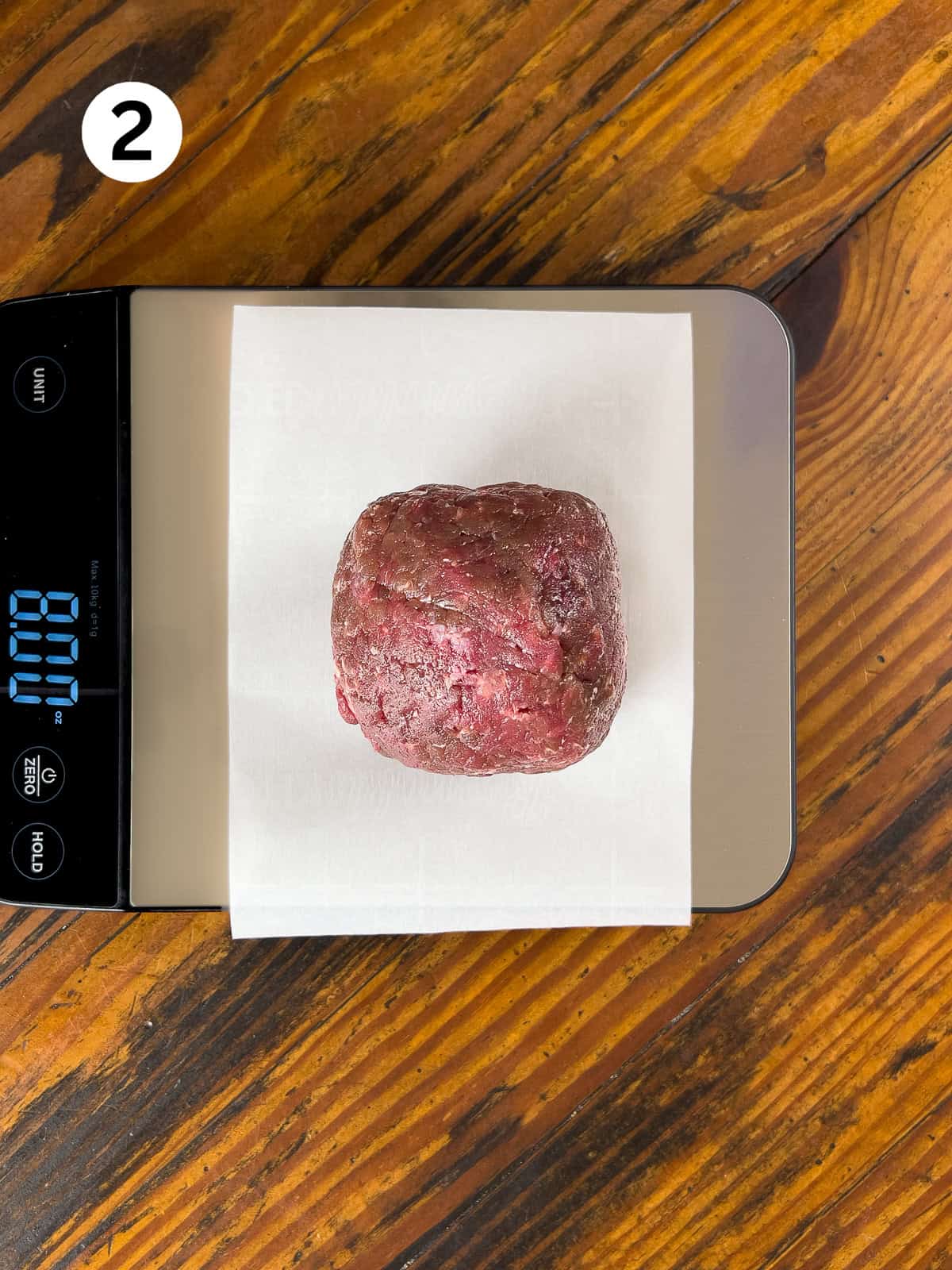
2. Portion the meat. Portion into 8 ounce patties.
Divide the seasoned ground venison into 8-ounce portions for thick steakhouse-style venison burgers.
A thicker burger allows you to develop a good crust while still achieving the perfect medium-rare to medium internal temperature.
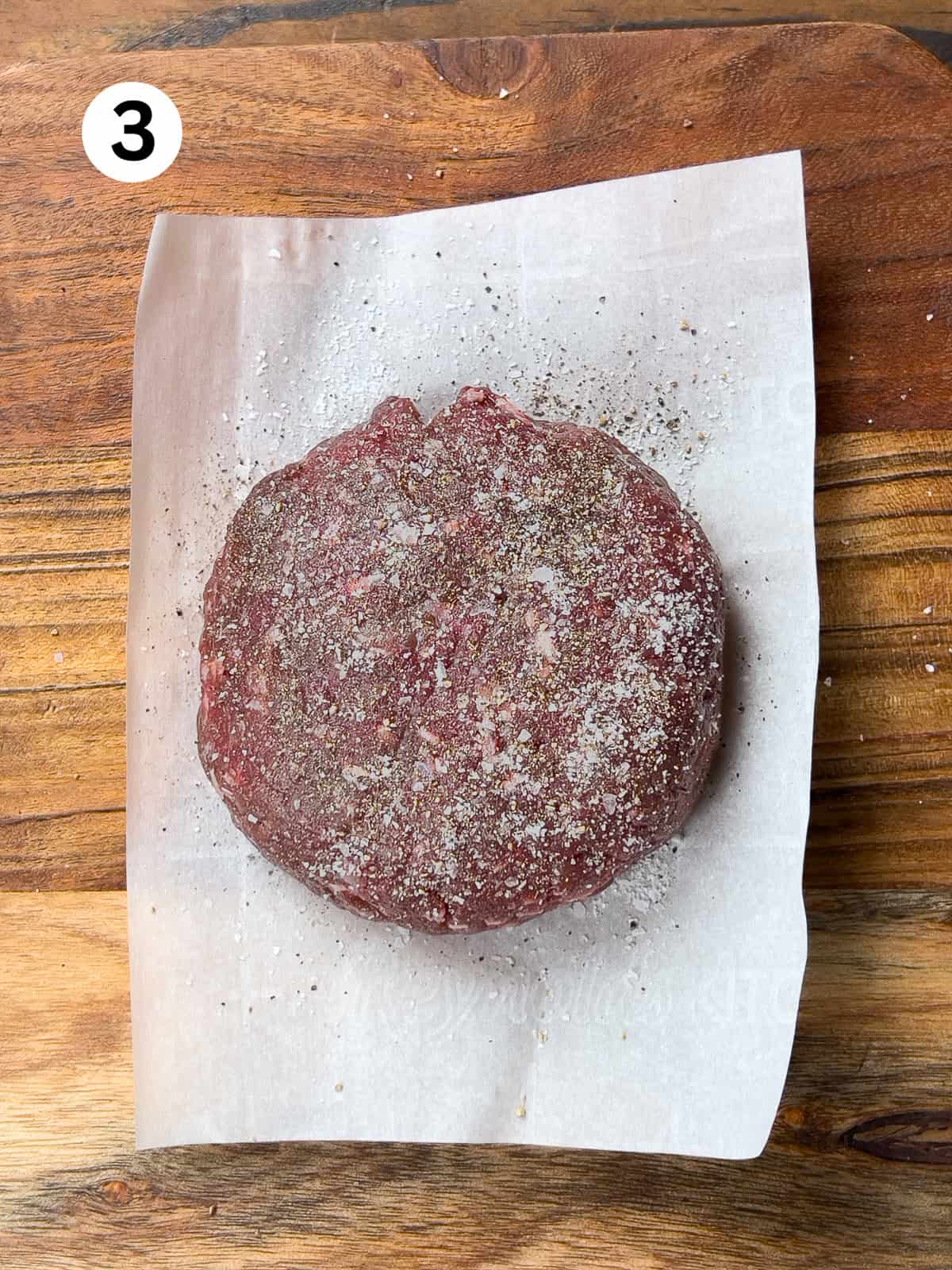
3. Shape, season and Rest. Shape the patties into uniform disks that are around 1 inch thick. Keeping each patty the same size helps ensure even cooking
Place the shaped patties on a tray lined with parchment paper. Season with salt and pepper and cover with plastic wrap. Place in the refrigerator for at least 1-2 hours. This helps the myosin in the meat naturally bind the patties. Take your patties out of the fridge about 45-60 minutes before cooking and let them rest at room temperature.
This step allows the internal temperature of the patties to rise slightly, so they cook more evenly and brown better in the pan or on the grill. This is especially critical when working with lean meats like venison, where you don’t have fat to protect you from overcooking.
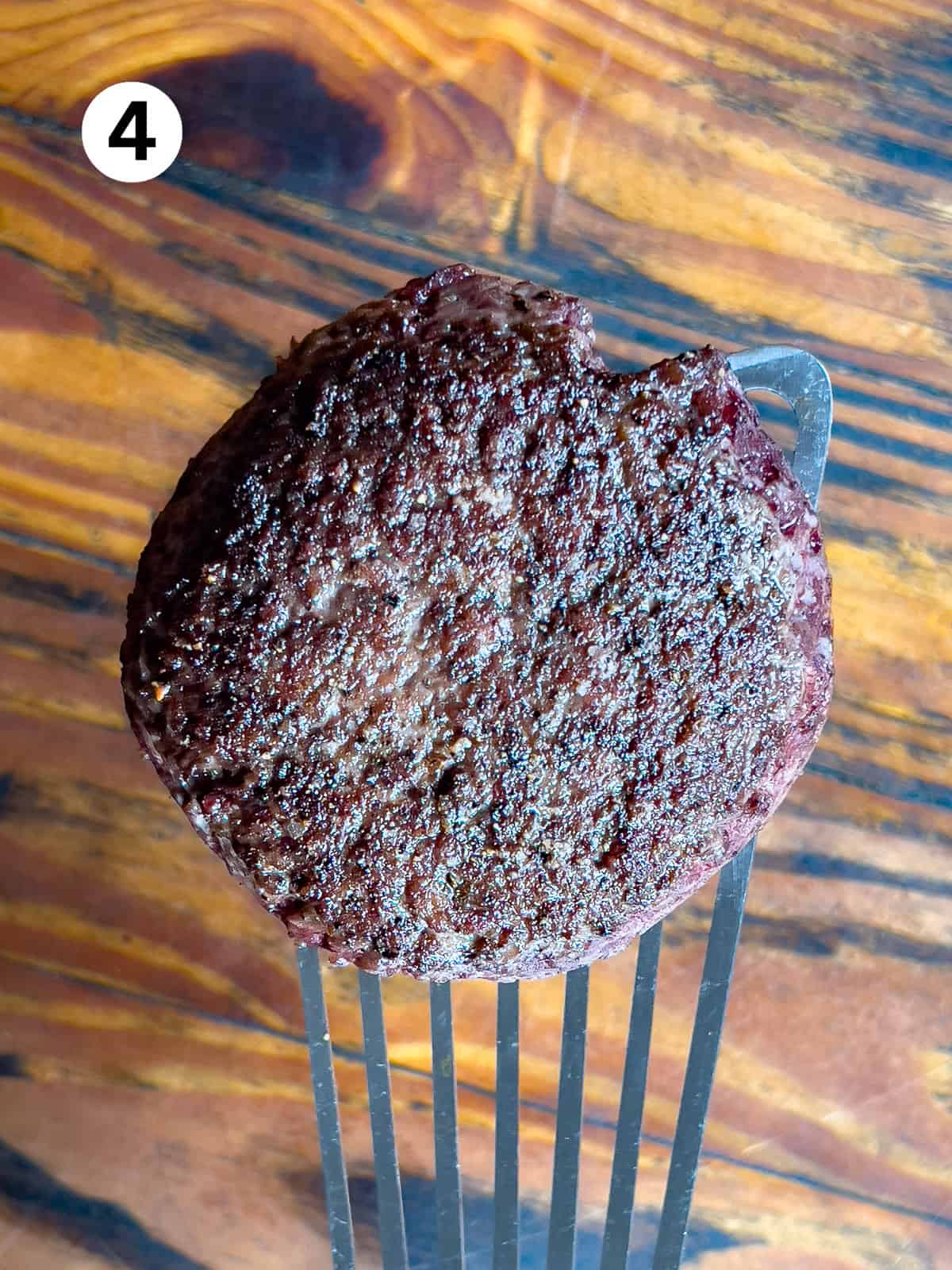
4. Cook. You have the option of cooking in a pan or on a grill.
To pan sear: Heat the olive oil in a cast iron skillet over medium-high heat. When the oil is shimmering hot, gently place the patties in the pan. Sear undisturbed for 2-3 minutes on the first side. Flip and cook the second side for another 2-3 minutes.
To grill: preheat the grill to medium-high, around 450–500°F, and clean and oil the grates well. Lean patties have no fat to release, so they’ll stick to a dirty grate and tear when you flip them. Place the patties over direct heat and grill undisturbed for 3–4 minutes, then flip once and cook another 3–4 minutes. If the outside is browning faster than the center is coming up to temperature, move the patties to the cooler side of the grill, close the lid, and let them finish there.
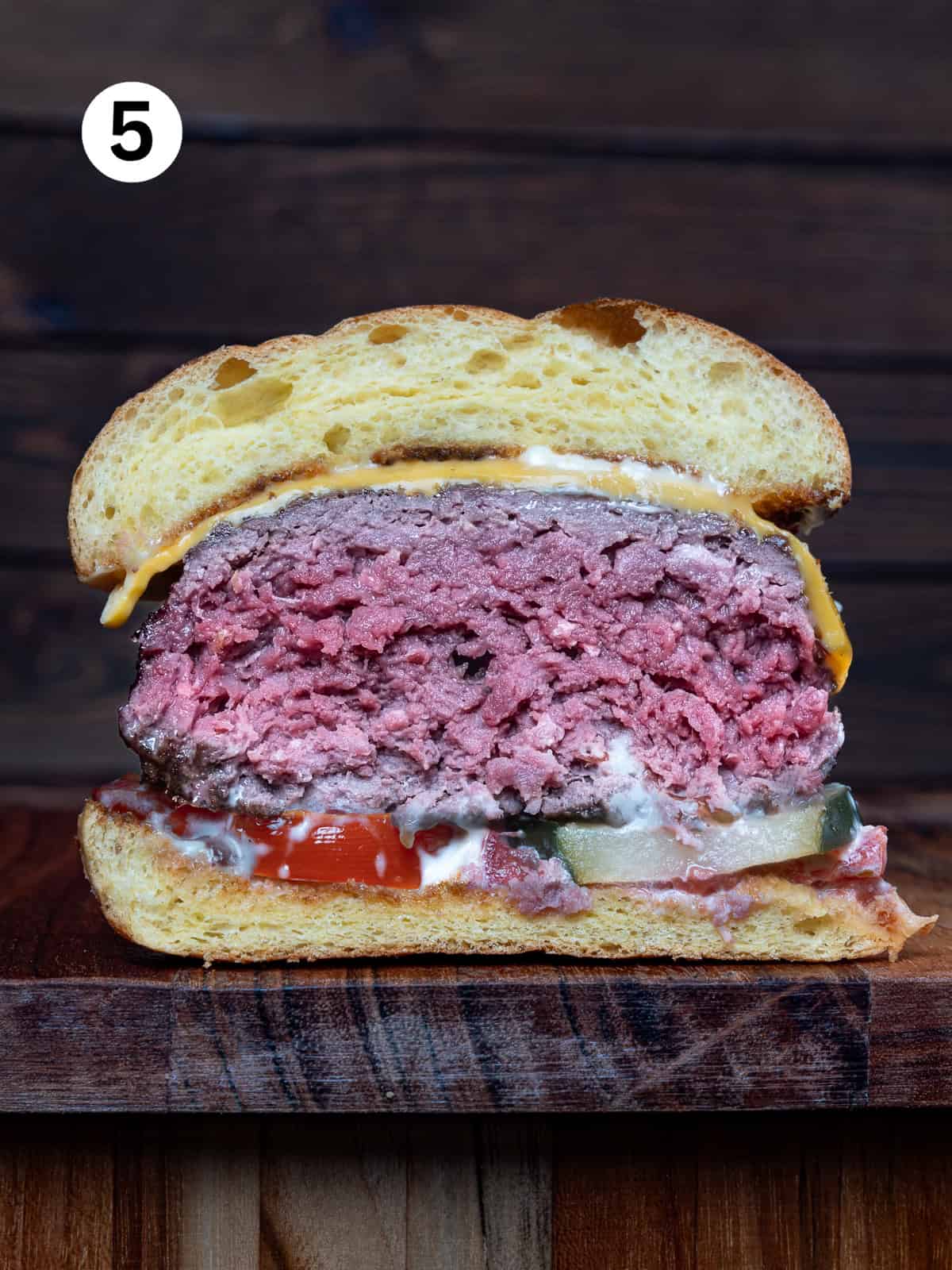
6. Rest the Patties and Serve. Remove the patties and let them rest for about 5 minutes. This keeps the juices where they belong, inside the burger. After resting, assemble your burger with the toppings of your choice and serve immediately.
Boost the Flavor by Basting in Butter: Layer in richness by basting your patties just like you would a steak. After flipping the burgers, add a tablespoon of cold butter, a smashed garlic clove, and a sprig of rosemary or thyme to the skillet. Tilt the pan and spoon the hot butter over the patties for 30-60 seconds. If you’re grilling, melt the butter with the garlic and herbs, and brush it over the patties after flipping.
Venison Burger Time & Temperature
Temperature is the whole ballgame with a lean burger, as you have a smaller margin of error. So the difference between a juicy venison burger and a dry one is often about 15 degrees and two minutes. Cook by the thermometer, and not a specific time.
The times below are a starting point for an 8 oz patty about 1 inch thick. Keep in mind that thickness, starting temperature, and how hot your pan or grill really is will affect the cooking time.
Pull the patties off the heat at the pull temp in the table. They’ll climb by roughly 5 degrees while they rest, which is what brings them to the final temperature.
| Doneness | Pull temp | After a 5-min rest | Skillet (per side) | Grill (per side) | What you’ll see |
|---|---|---|---|---|---|
| Medium-rare (recommended) | 130–135°F | 135–140°F | 2–3 min | 3–4 min | Warm red center, juicy, still yields easily |
| Medium (recommended) | 140–145°F | 145–150°F | 3–4 min | 4–5 min | Rosy pink center, firmer but still juicy |
| Medium-well | 150–155°F | 155–160°F | 4–5 min | 5–6 min | Faint pink, noticeably drier |
| Well done | 160°F+ | 160°F+ | 5–6 min | 6–7 min | No pink; expect a dry patty without added fat |
A note on 160°F. The USDA recommends 160°F for all ground meat, since grinding spreads surface bacteria throughout. That guidance is built around commercial grind, which can combine many animals. I cook whole-muscle venison I ground myself to medium-rare or medium. For processor or store-bought ground meat, or for kids, older guests, or anyone pregnant or immunocompromised, cook to 160°F.
Chef Tips & Troubleshooting
- Don’t overwork the meat. Mix only until the seasoning is distributed. Working the meat the way you’d knead deer meatballs makes the patty dense and springy, and it starts to render any precious fat.
- Why venison burgers fall apart and how to prevent it. Almost always, one of these five is the culprit: the meat was overworked, the patty was too warm, the mix was too wet (fresh onion and too much egg are the usual culprits), the patty was flipped too early, or it was pressed with a spatula. Chill the patties, flip once, don’t press, and you won’t need a binder.
- Cooking for a crowd? Sear every patty first to build the crust, then hold them in a 250°F oven or on the cool side of the grill until each one comes up to temperature. You get consistent results without juggling a dozen patties over high heat.
- Make them ahead. Forming the patties the day before actually improves the structural integrity. The extra time in the fridge firms them up and makes your cooking day easier.
- Weigh the patties. Use a kitchen scale if you have one to weigh the patties. If you don’t have one, use a 1 cup measure and loosely pack the meat. Even-sized patties help ensure consistent cooking. This also lets you know exactly how many patties you will have.
- Don’t cover with foil. Don’t be tempted to listen to outdated information. Tenting your burgers with foil will cause the internal temerature to rise. This will results in overcooked burgers.
Venison Burger Recipe FAQs
How do you keep venison burgers from being dry?
Don’t overcook. Venison has almost no intramuscular fat, so there’s nothing to keep the patty moist once it passes medium, just like with a backstrap steak. So a dry burger is a cooking problem far more often than a meat problem. Make the patty thick (8 ounces, about an inch), pull it at 130–145°F, and let it rest five minutes before it hits the bun. Adding fat to the grind is a second lever, but it won’t save a burger you cooked to 165°F.
Do you need to add fat to venison burgers?
No. This recipe allows you to use pure venison with no pork or beef fat added. The thick patty, plus cooking it to medium or medium-rare, is what makes that work. Fat is helpful if you want thinner patties, want to cook past medium, or are working with a grind that’s already been cut at the processor, but it isn’t required.
Do I need a binder to make deer burgers?
Not if you chill the patties. Salt and gentle handling pull the soluble protein to the surface of the meat, and an hour or two in the fridge lets that protein set so the patty holds itself together. Most burgers that fall apart were overworked, too warm, too wet, flipped early, or pressed with a spatula. If your meat is unusually dry and you want insurance, two tablespoons of whisked egg per pound is enough. Skip the crackers and breadcrumbs.
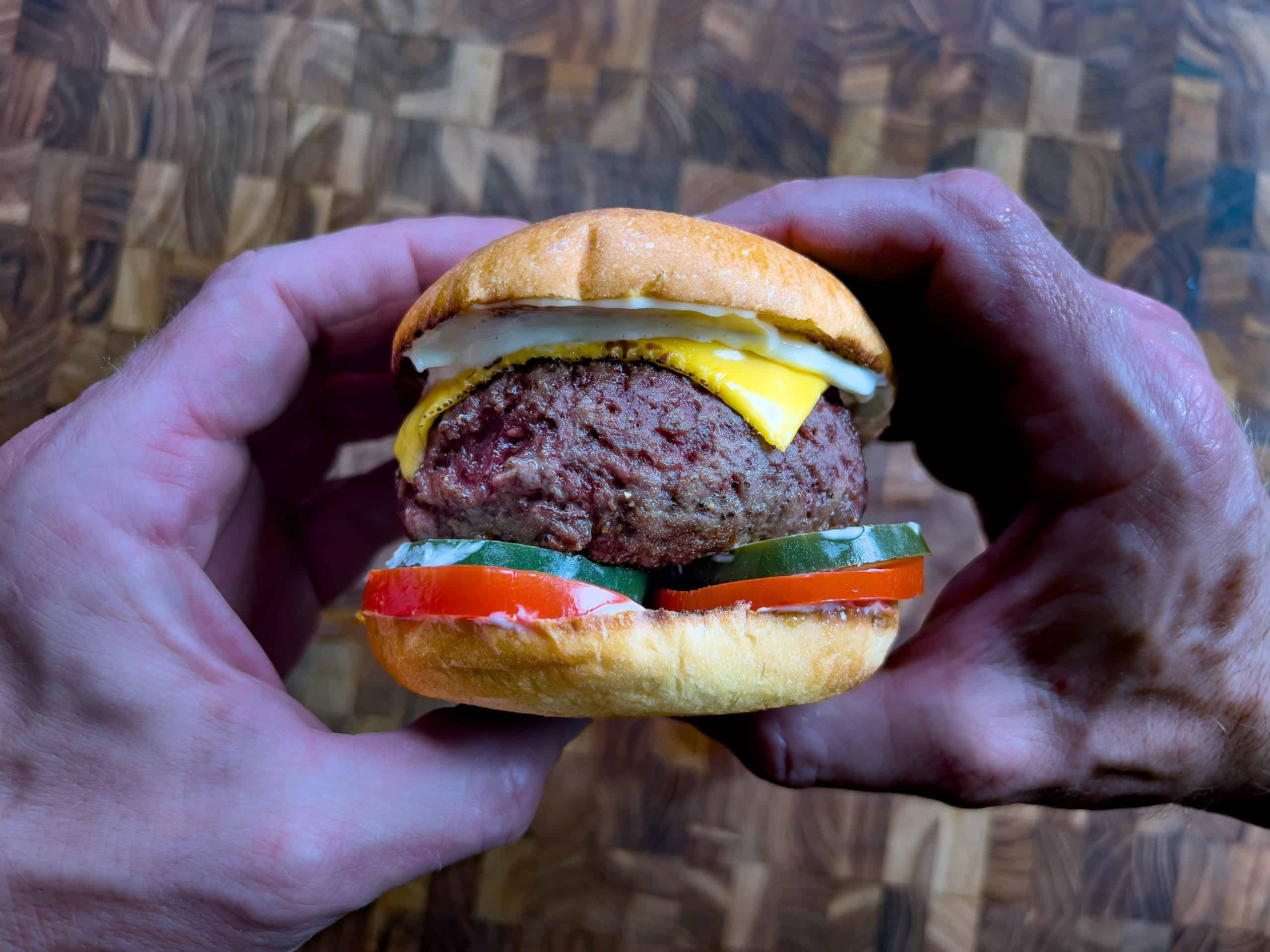
What to serve with Venison Burgers
- Build it however you like. For a classic setup, American or cheddar cheese, crisp romaine or iceberg, sliced tomato, shaved red onion, and pickles. Or kick things up with a few slices of bacon and pickled mushrooms. For sauces, ketchup, mayo, or my gochujang spicy mayo.
- Serve it Southern Style. Growing up in North Carolina, we often smothered our burgers in coleslaw and chili. If you want to get your hands messy, try my venison chile recipe.
- Choose your bun: Classic hamburger buns, toasted brioche buns, pretzel buns, and focaccia buns all work great. Toast them before building your venison burgers.
- Add a side: Stick with fries if you prefer a classic pairing or a simple salad, like my Korean-style spicy cucumber salad.
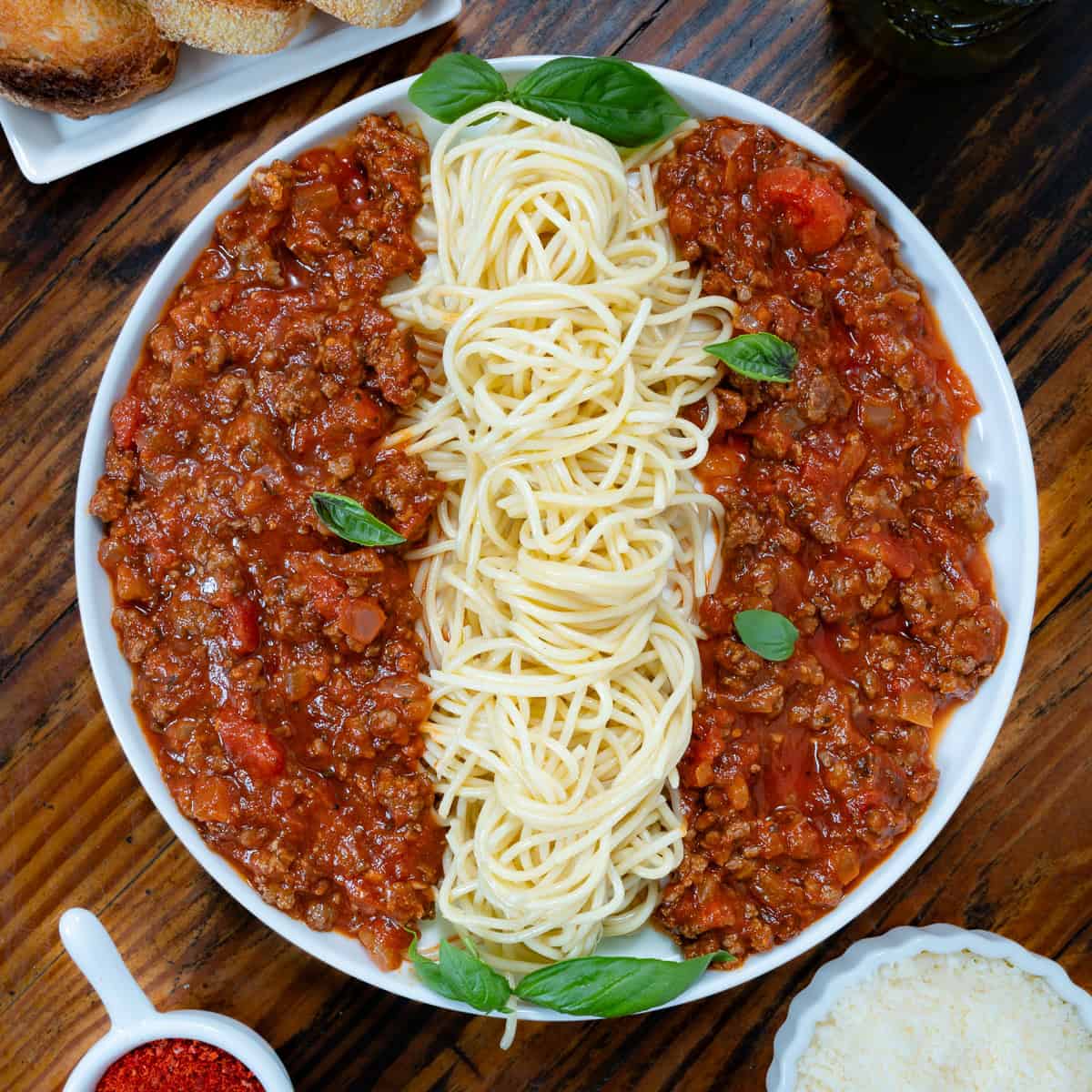
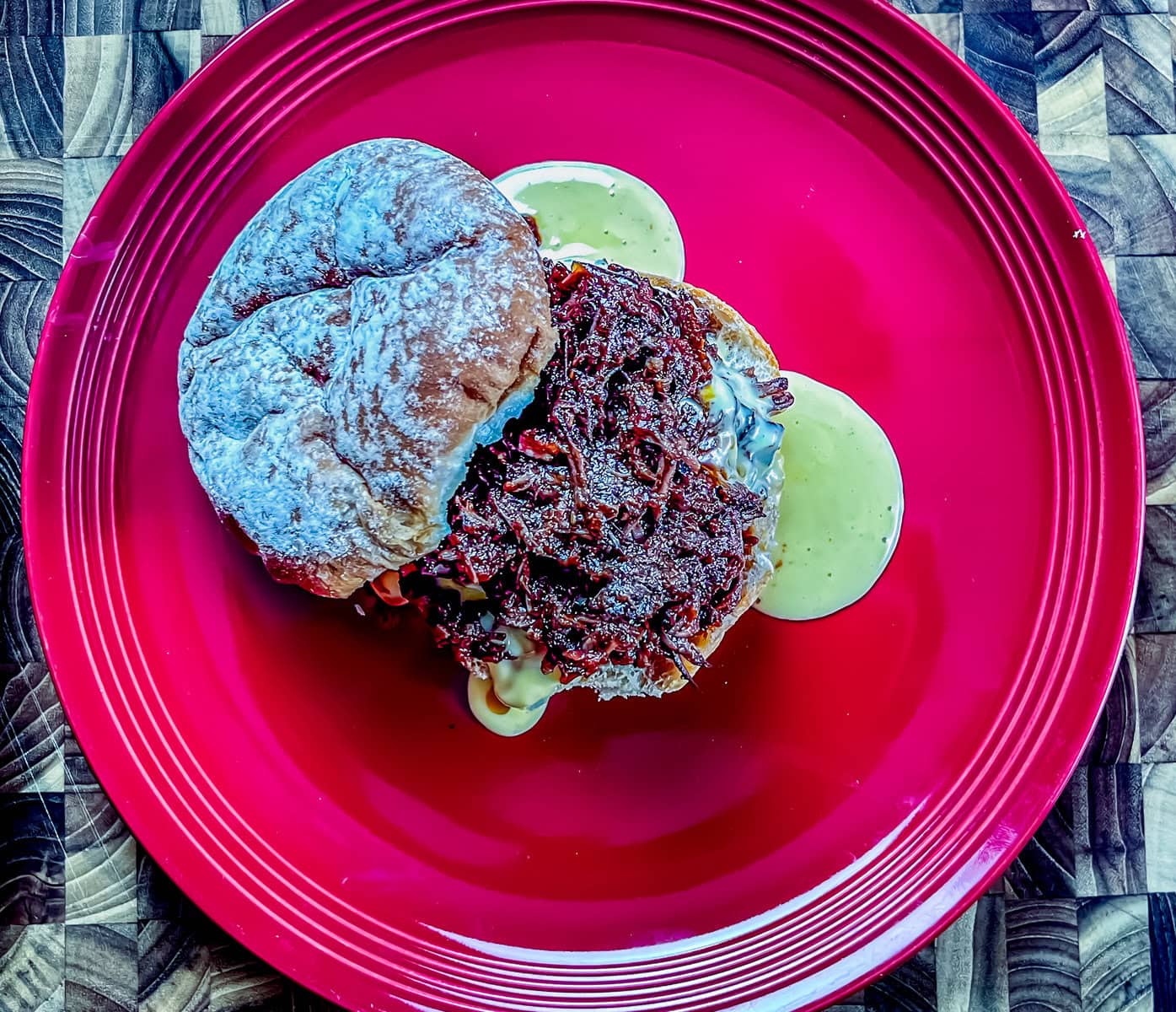
More Ground Venison Recipes
Tried this Recipe? Please leave a ⭐⭐⭐⭐⭐ rating in the recipe card below and leave a comment. I love to hear from readers! And if you have any cooking questions or want to share your latest food photos, give me a shout on Instagram at @larry__white.
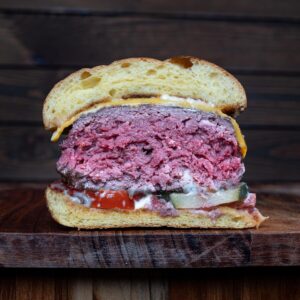
Venison Burgers Recipe
Ingredients
- 1 lb ground venison
- 1 tsp kosher salt
- ½ tsp black pepper
- 1 tbsp olive oil (for skillet searing)
- 2 burger buns
Optional Ingredients for Basting
- 1 tbsp cold butter
- 1 garlic clove, smashed
- 1 sprig rosemary or thyme
Instructions
Season the venison:
- In a large bowl, lightly season the ground venison with salt and pepper. Gently work the seasoning into the meat. Do not overmix. You will be seasoning the meat again after shaped into patties.
Form patties:
- Divide into two 8 oz portions and shape into thick patties, about 1 inch thick. Chill for 1 hour (optional but recommended).
Rest before cooking: (Optional)
- Remove patties from the fridge 45-60 minutes before cooking to allow them to come to room temperature.
Pan Fry or Grill:
- Just before cooking, lightly season the patties with salt and pepper.To pan sear: Heat olive oil in a cast iron skillet over medium-high heat. Sear the patties on each side until a golden crust forms, 2 to 3 minutes. To grill: Preheat grill to medium-high. Oil the grates, then cook patties 3-4 minutes per side over direct heat. Move to indirect heat if needed to finish.
Optional butter baste:
- After flipping the patties, add butter, garlic, and rosemary to the skillet. Tilt the pan and spoon the melted butter over the patties for 30-60 seconds to enhance flavor and moisture. If grilling, baste with infused butter.
Check temperature:
- Use an instant-read thermometer. Pull patties when internal temp reaches: Medium-rare: 130-135°F. Medium: 140-145°F
Rest and build:
- Let patties rest 5 minutes uncovered. Toast buns and assemble with desired toppings.
NOTES
- For dry meat: If your ground venison looks a bit dry you can mix in 2 tablespoons of whisked egg per pound of venison.
- Best cuts for grinding: top round, bottom round, or backstrap.
- Chill and temper: Chill the venison burger mixture for an hour and allow the patties to sit at room temperature before cooking for better results.
- Cooking for a group? Sear patties first, then finish in a 250°F oven or over indirect heat on the grill.
- Want a thinner burger? Try my Oklahoma onion burger recipe.
Nutrition
Nutrition information is automatically calculated, so should only be used as an approximation. Nutrition is per serving.


5 thoughts on “Venison Burger Recipe (Thick & Juicy)”
Great tips my friend! These turned out excellent!
I need this!
About time i found a rexioe for a proper thick deer burger.
Best way ive ever made a deer burger. We’ll make them again this fall.
Last pack of deer in the freezer and i found this recipe! I call it fate!