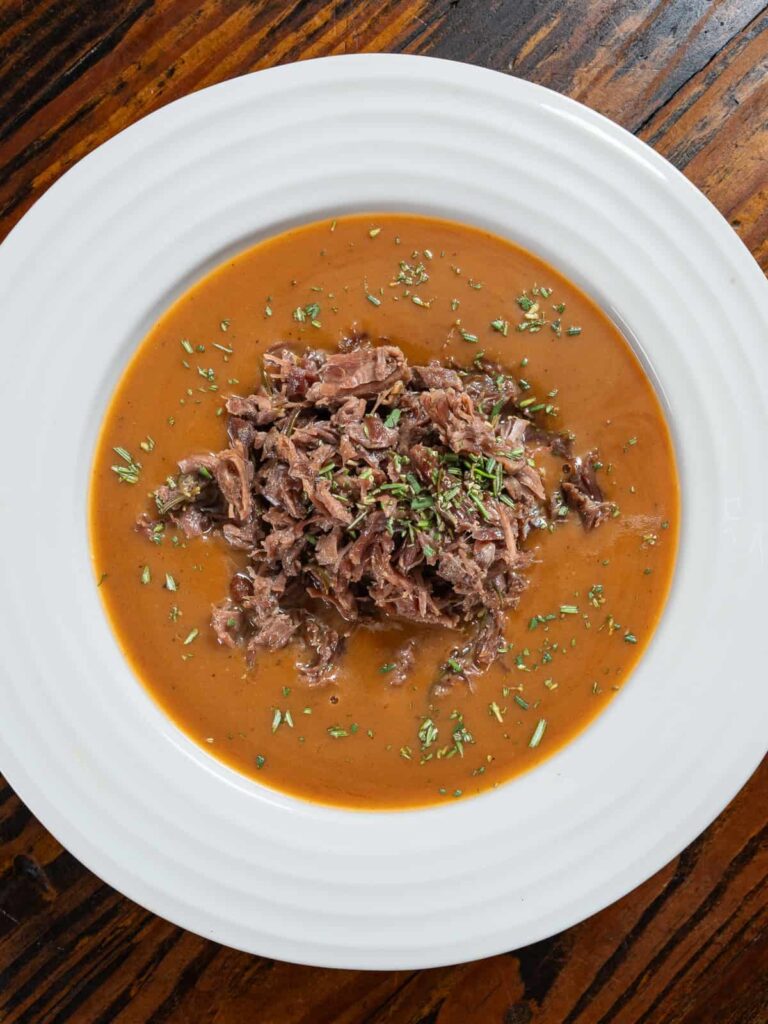

This crockpot venison roast is made with a sirloin tip, shoulder, or neck roast (preferbly 3 to 4 pounds) braised in white wine, soy sauce, hoisin, ginger, garlic, chile, and warm spices until fork-tender. I like to serve it either as-is with some of the cooking liquid or thickened into a sauce with a cornstarch slurry. It’s perfect for families wanting a break from grandma’s traditional style pot roast.
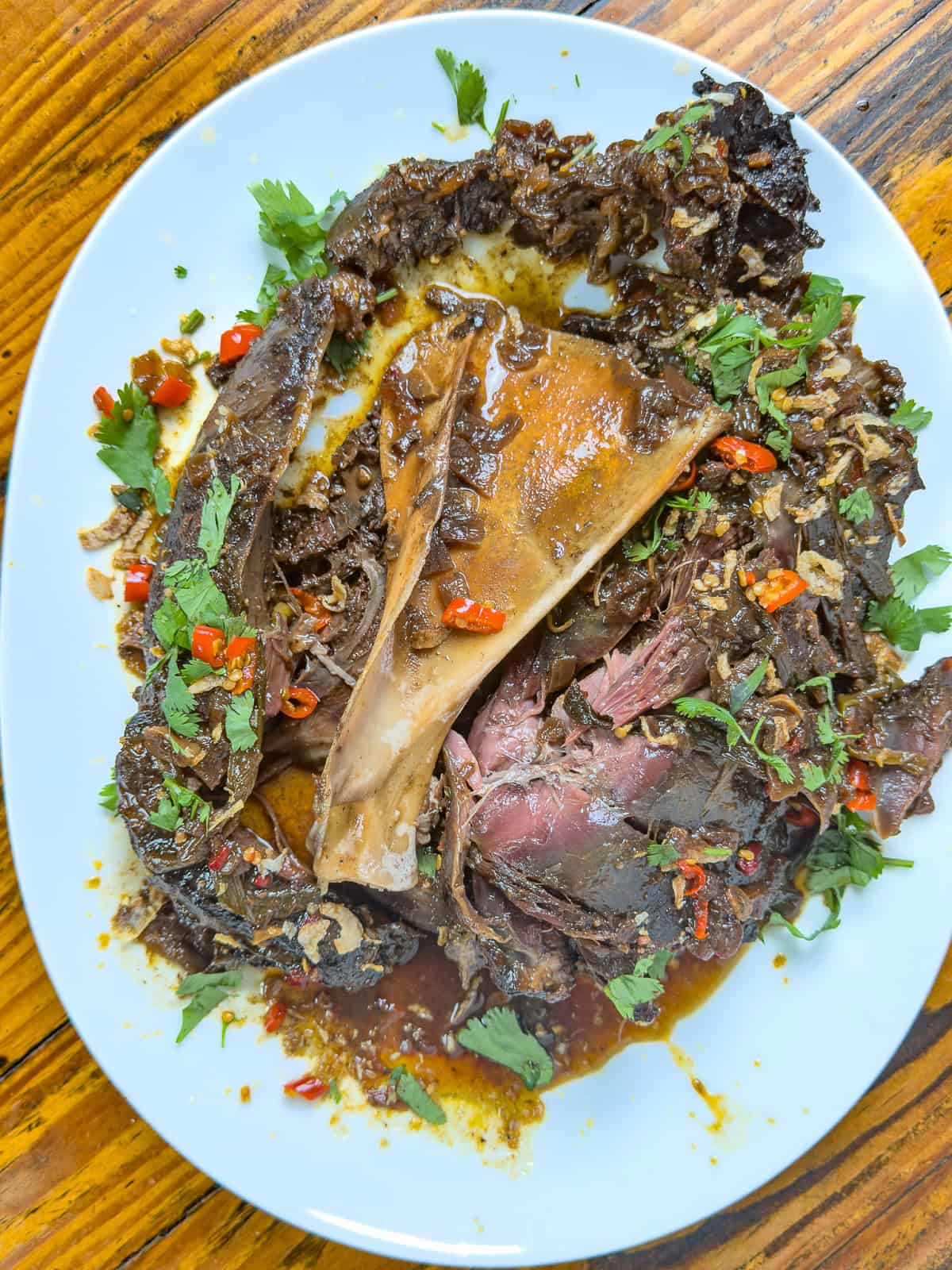
Quick Look: Crockpot Venison Roast
- Ready in: About 7½ to 9½ hours
- Serves: 4 generous servings
- Calories: 649 (including the cooking liquid)
- Main ingredients: White wine, soy, hoisin, ginger, garlic, chile, and warm spices.
- Best cut/protein: 3 to 4-pound sirloin tip, shoulder roast, or neck roast
- Cook method: Slow Cooker / Crockpot
- Good to know: Treat the cook time as a range. Different roast cuts can reach the optimal tenderness at different times.
SUMMARIZE & SAVE THIS CONTENT ON
I originally developed this recipe a few years ago using venison shoulder. After numerous reader requests, I broadened the guidance to work with sirloin tip and neck roast as well. I think that’s worth mentioning, because processors use the word “roast” for several different cuts. And those cuts aren’t exactly identical, even though all three work here. If you don’t think your meat was properly labeled, check out my guides on deer hind quarter cuts and venison neck. They should help you identify what you’re working with.
What Makes this Recipe Great
- A different take on venison roast. White wine, soy, hoisin, ginger, garlic, chile, cinnamon, and star anise give the roast a savory, Asian-inspired flavor profile.
- Works with more than one roast cut. The method is written for a 3 to 4 pound sirloin tip, shoulder, or neck roast, giving you some flexibility with what you have in the freezer.
- You can make it less hands-off if you want. Sauté the aromatics first for more flavor, or add everything directly to the slow cooker when you want to keep the prep simple. Make an easy sauce using a cornstarch slurry, or simply serve with the braising liquid.
- More versatile than a traditional crockpot roast. After shredding the venison, you can add it to rice bowls, noodle bowls, sandwiches, or egg rolls. For this reason alone, it’s one of my favorite slow cooked venison recipes.
Notes on Ingredients
See the recipe card for full information on ingredients and quantities.
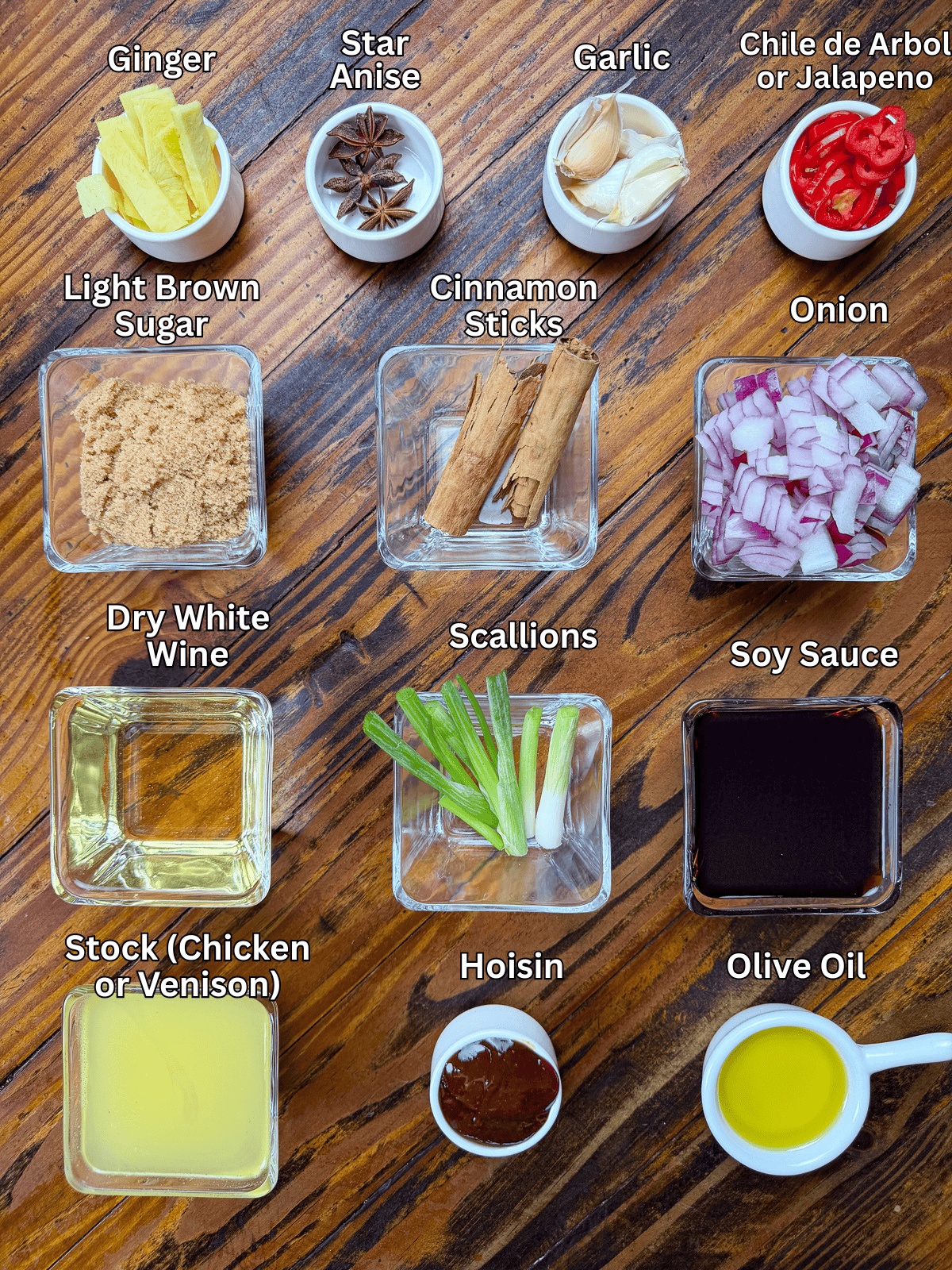
- Venison roast: Use a 3 to 4 pound sirloin tip, shoulder roast, or neck roast. Sirloin tip is often called the football roast. The roast can be bone-in or boneless. Just keep in mind that a bone-in roast generally takes longer to cook.
- White wine: I use dry white wine as my primary choice for the braising liquid. Shaoxing wine is also a great option if you can find it.
- Soy sauce and hoisin: These give the braising liquid most of its salty, savory, and sweet backbone. Taste the cooking liquid before thickening it at the end, because the seasoning can concentrate during the long cook.
- Chile de árbol: Dried chiles de árbol are my first choice here. They bring some heat without turning the braise into a chile-heavy sauce.
- Cinnamon and star anise: Leave them whole. They slowly flavor the braising liquid and are easy to remove before serving.
- Stock: Use 1 to 3 cups of light or sodium-free chicken stock or venison bone broth (venison stock), adding enough to bring the braising liquid about halfway up the roast.
Substitutions and Additions
- Swap out the Dried Chiles: If dried chiles de árbol aren’t available, use 1 red or green jalapeño. Or, for simplicity, use 1/2 teaspoon of cayenne pepper.
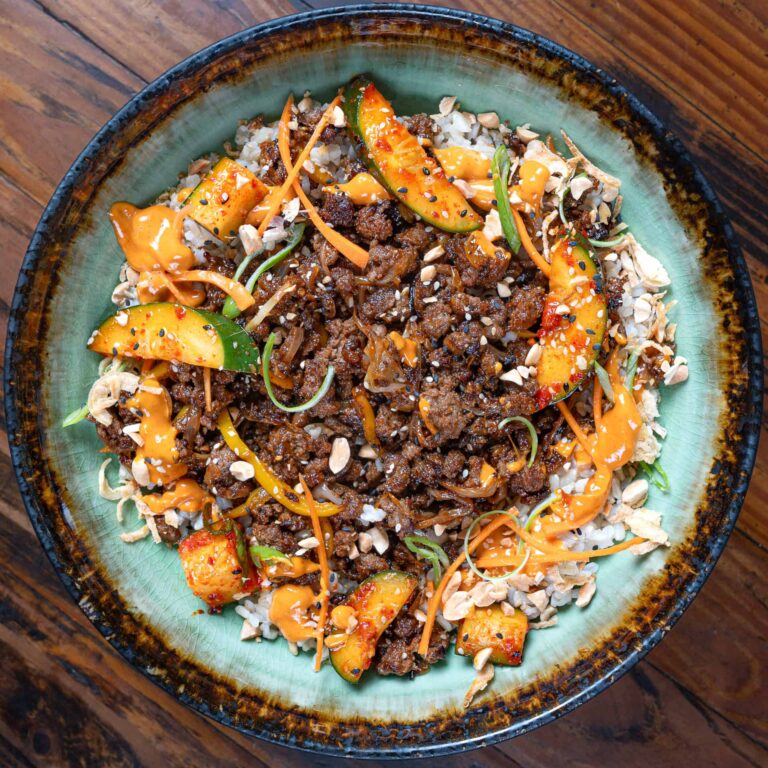
- Good to have on hand for serving: Sliced scallions, cilantro, toasted peanuts, and shredded cabbage are all good additions to the finished roast. If you have extra, they also pair nicely with my Korean-inspired venison and rice bowls.
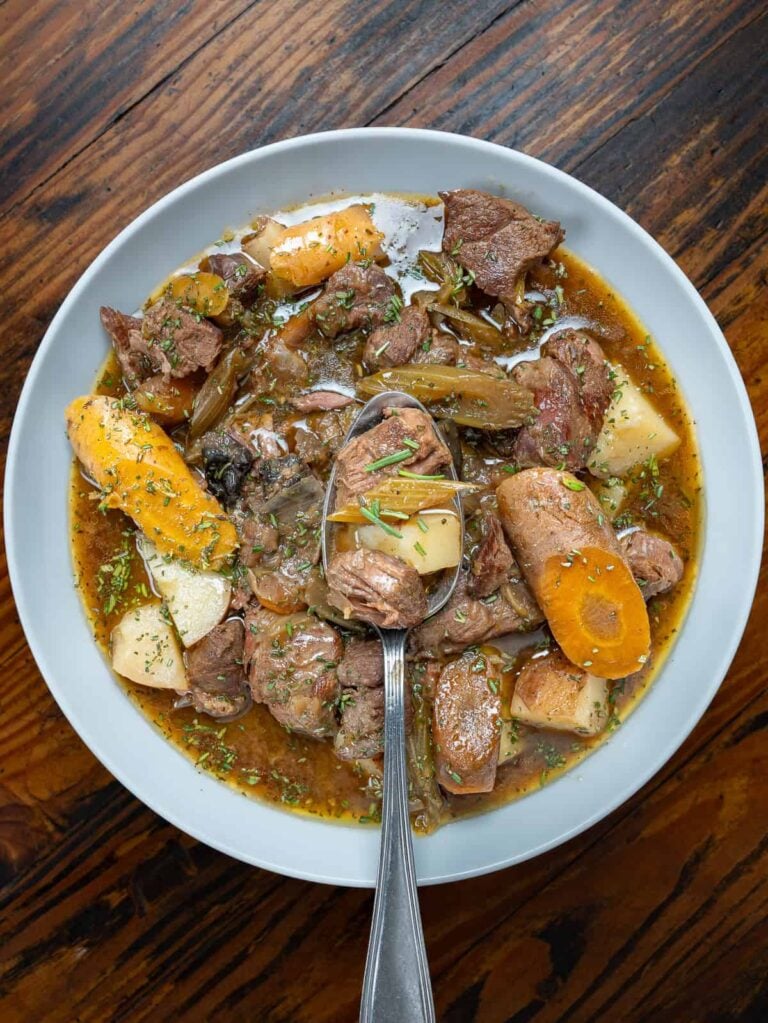
- Add carrots: For an easy way to add vegetables, carrots pair nicely with this dish. Add up to 3 large carrots cut into 1-inch pieces with the meat.
- Use bacon fat: To add a smoky element, sauté the ingredients listed in step 1 in bacon fat instead of olive oil. I like doing this for a nice contrast to the sweet umami flavors.
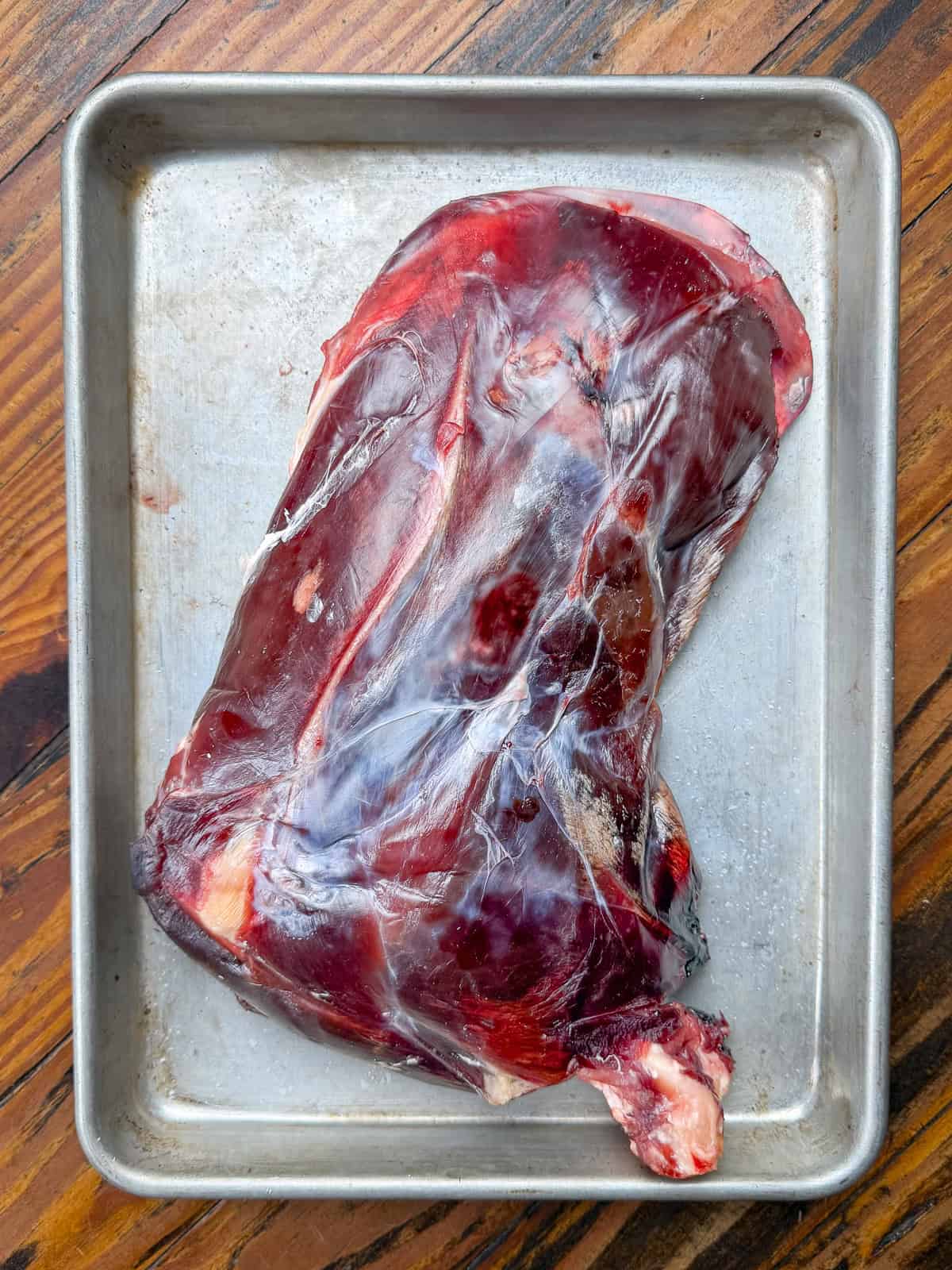
Above is a picture of a dry-aged venison shoulder roast. Dry aging your roasts adds a depth of flavor you can’t get anywhere else.
How To Make Crockpot Venison Roast
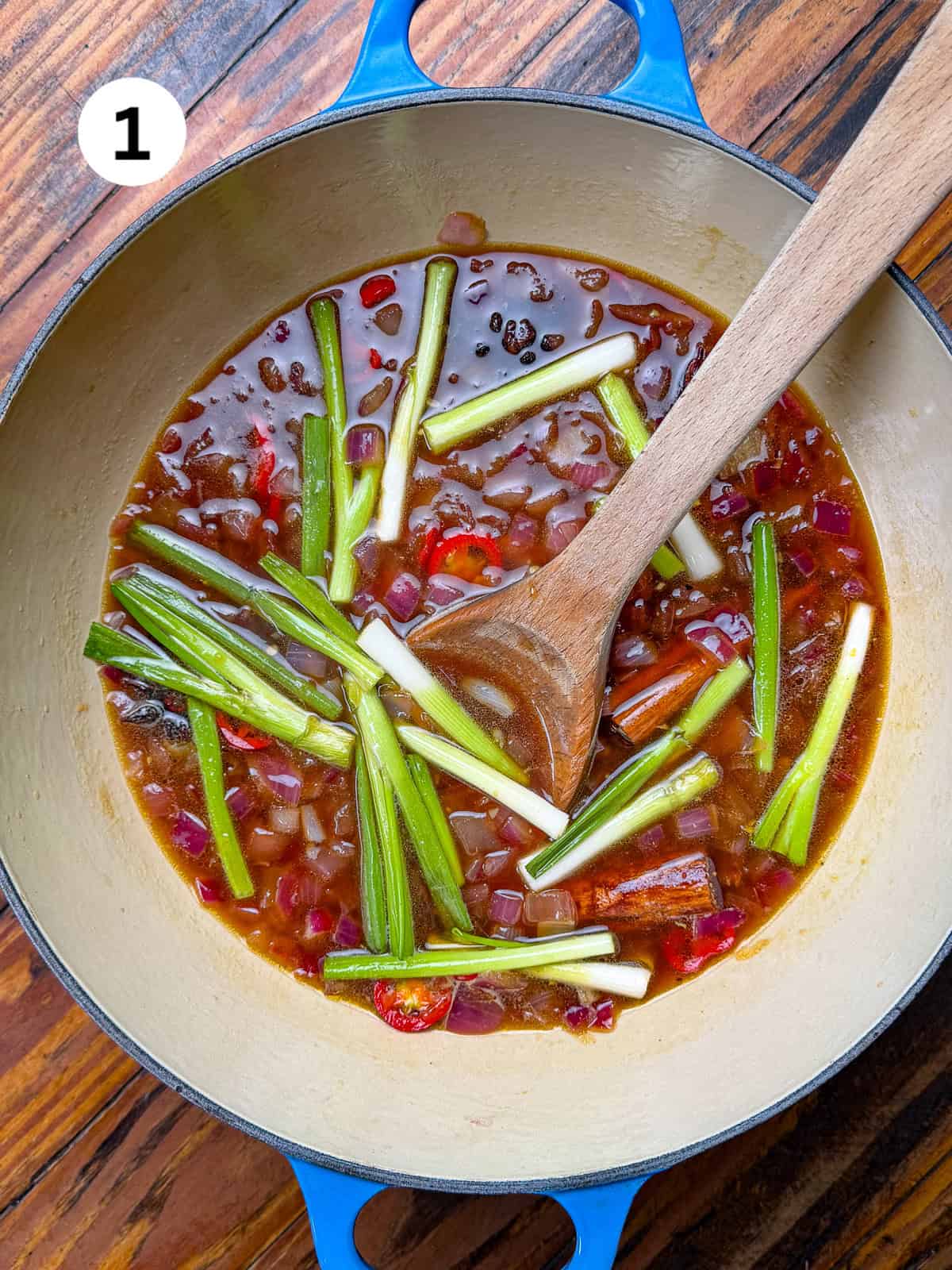
1. Build the braising liquid. Heat the cooking oil in a large pot over medium-high heat. Add the onion and cook for about 3 minutes. Add the ginger, garlic, cinnamon, star anise, and chiles de árbol. Cook for another 2 to 3 minutes, stirring often.
Add the white wine, soy sauce, hoisin, brown sugar, scallions, and 1 cup of stock. Bring to a simmer and cook for about 1 minute, then turn off the heat.
Note: To skip the stovetop step, add everything directly to the slow cooker.
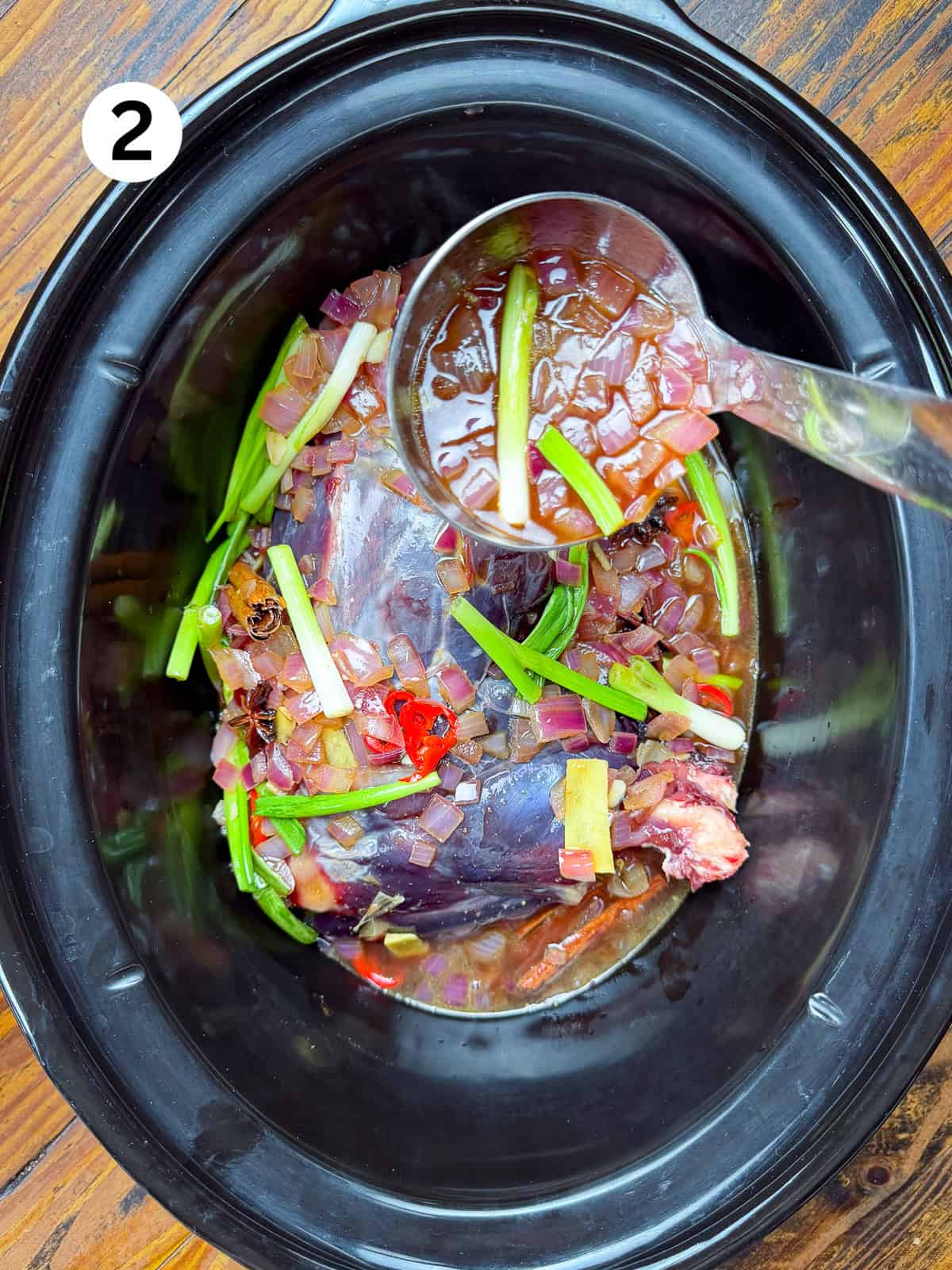
2. Load the slow cooker. Add the venison to the slow cooker. Pour the liquid mixture from the pot over the meat. Add more stock as needed so the liquid comes about halfway up the roast. You may use up to 3 to 4 cups of stock.
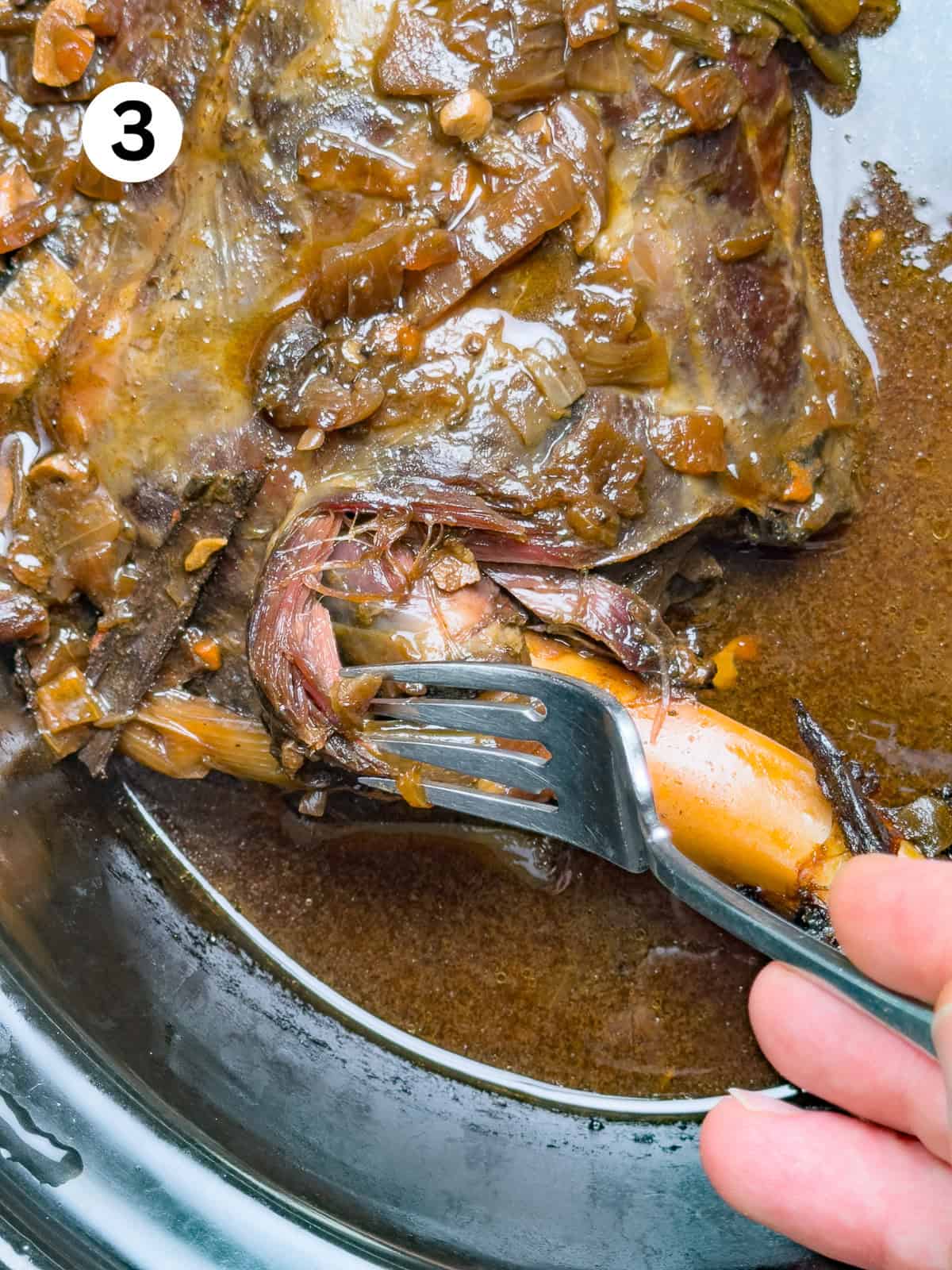
3. Cook until fork-tender. Cover and cook on LOW for about 7 to 9 hours. If it’s practical, flip the roast once during cooking so the exposed side spends some time in the braising liquid.
Start checking toward the lower end of the time range. The roast is ready when a fork slides into the meat easily, and it begins to pull apart with little resistance.
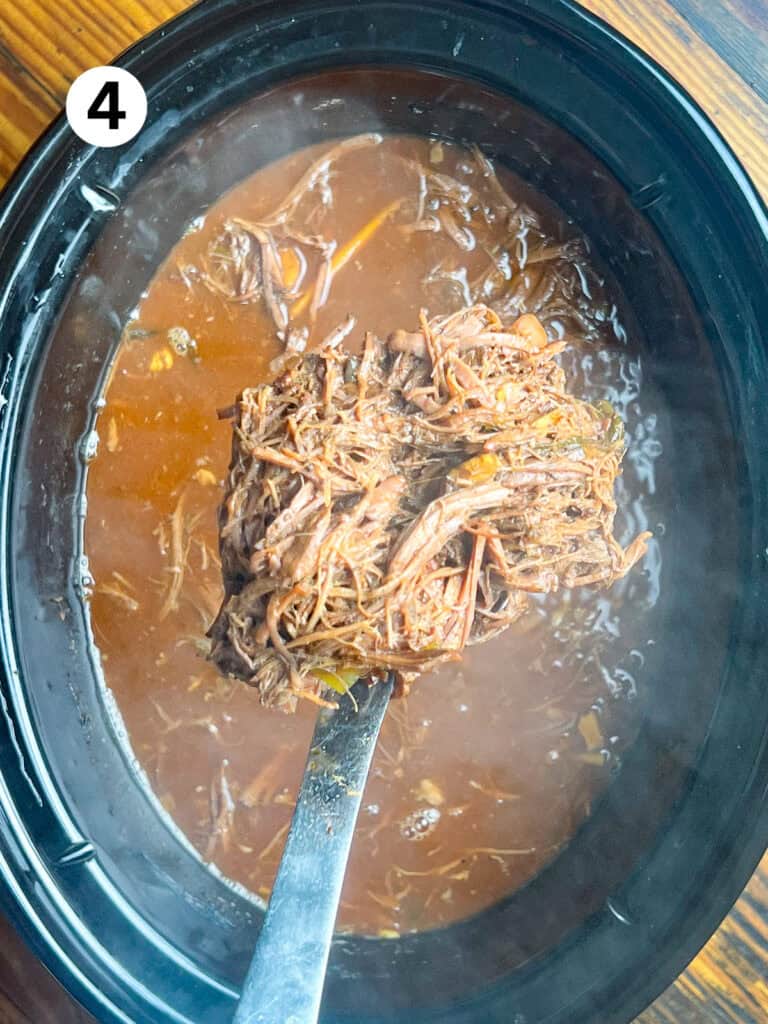
4. Finish the roast. Remove the tender venison and shred the meat. Taste the cooking liquid before serving. If it tastes too salty or concentrated, stir in a little water or unsalted stock until the flavor is where you want it.
Serve the liquid as-is, or thicken it with the optional cornstarch slurry in the recipe notes.
Chef Tips & Troubleshooting
- Don’t completely trust the clock. Seven to nine hours is the working range for a 3 to 4 pound roast. The cut, shape, bone-in versus boneless preparation, and your slow cooker can all affect timing. If a fork still meets a lot of resistance, the roast needs more time, possibly up to 2 more hours. So give yourself some wiggle room so you don’t run behind for dinner.
- Every “venison roast” is different. Sirloin tip, shoulder, and neck all work with this recipe. But they aren’t 100 % interchangeable in terms of exact cooking time. Larger bone-in muscles will take longer than diced venison stew meat. Use the same method, then judge each one by tenderness as I mentioned above. I do this in my venison neck roast recipe as well.
- Don’t completely submerge the roast. Keep the braising liquid roughly halfway (three-quarters max) up the meat. If you add too much liquid, you will be cooking this like a venison stew, which will take much longer.
- You don’t have to brown the venison. I developed this recipe without searing the roast. While it can add another layer of flavor, it’s not needed here. Plenty of flavor is already there.
- Taste before thickening. Soy and hoisin bring plenty of sodium to the cooking liquid. If the finished liquid tastes too strong or salty, dilute it with a little water or unsalted stock.
Crockpot Venison Roast FAQs
Will deer roast get more tender the longer you cook it?
Not indefinitely. You will get to the point where the meat loses its natural moisture content. To remedy that, I recommend moistening the meat with some of the cooking liquid. Or, better yet, rest the meat overnight in the cooking liquid, then gently reheat.

What to serve with this Venison Roast
- Toppings: Finish with scallions, cilantro, shredded cabbage, fried garlic, and fried shallots.
- Rice bowls: If you love venison and rice, try adding the venison over short grain or jasmine rice. Then top off with some of the cooking liquid or thickened sauce.
- Noodle bowls: Toss the venison with noodles and enough sauce to coat everything without making the bowl soupy. I like ramen, udon, and soba noodles.
- Sandwiches: Pile the shredded roast onto a soft bun. The thickened sauce works especially well here because it stays with the meat instead of soaking into the bread.
- Egg rolls or spring rolls: Let some excess liquid drain from the shredded venison, then chill it before using it as a filling. Serve the sauce on the side or try my homemade duck sauce or Korean mayo sauce.
More Venison Slow Cooker Recipes
Tried this Recipe? Please leave a ⭐⭐⭐⭐⭐ rating in the recipe card below and leave a comment. I love to hear from readers! And if you have any cooking questions or want to share your latest food photos, give me a shout on Instagram at @larry__white.
Crockpot Venison Roast
Ingredients
- 3 to 4 pound venison roast (such as sirloin tip, shoulder roast, or neck roast)
- 2 to 3 tablespoons cooking oil (or bacon fat)
- 2 cups onion (sliced thinly)
- 6 cloves of garlic (peeled and chopped)
- 2 two-inch pieces fresh ginger (thinly sliced)
- 2 three-inch cinnamon sticks
- 3 whole star anise
- 2 tablespoons hoisin sauce
- 1¾ cups white wine (or shaoxing wine)
- ½ cup soy sauce (naturally brewed)
- 3 dried árbol chiles (can be substituted with 1 seeded jalapeno or 1/2 teaspoon cayenne)
- ⅓ cup light brown sugar
- 1 to 3 cups light chicken stock (or venison bone broth)
- 1 bunch scallions (cut in half)
Instructions
- Heat the cooking oil or bacon fat in a large pot over medium-high heat. Add the onion and cook for about 3 minutes. Add the ginger, garlic, cinnamon, star anise, and chiles de árbol. Cook for another 2 to 3 minutes, stirring often.
- Add the white wine, soy sauce, hoisin, brown sugar, and 1 cup of stock. Bring to a simmer and cook for about 1 minute to dissolve the sugar, then turn off the heat.
- Place the venison roast and scallions in the slow cooker. Pour the braising mixture over the meat. Add more stock as needed so the liquid comes about halfway to three-quarters of the way up the roast. You may use up to 3 cups of stock total. Important Note: You can skip this stovetop step and add everything directly to the slow cooker. But it will be less flavorful.
- Cover and cook on LOW for about 7 to 9 hours. Flip the roast once during cooking if practical. Start checking for tenderness around the 6-hour mark. The roast is ready when a fork slides into the meat easily, and it begins to pull apart with little resistance.
- Remove and shred the venison. Taste the cooking liquid. If it tastes too salty or concentrated, dilute it with a little water or unsalted stock. Serve the liquid as-is, or thicken it using the optional cornstarch slurry in the notes.
NOTES
Using a Neck roast: A whole bone-in neck may need additional cooking time. Or you can cut it in half to speed things up. Chiles: If you can’t find dried árbol chiles, use 1 red or green jalapeño. A 1/2 teaspoon of cayenne will work if you’re in a pinch. Thickening the Cooking Liquid: Before starting, check whether the cooking liquid tastes too salty or concentrated. If so, add water or unsalted stock about ¼ cup at a time until the flavor is right. Remove the roast and turn the slow cooker to the high setting before thickening. Thickening Method:
- For roughly 4 cups of cooking liquid, whisk together 3 tablespoons cornstarch and 6 tablespoons cold water until smooth. Slowly whisk this mixture into the slow cooker until fully incorporated.
- Cook, stirring every minute or two, until lightly thickened. For a thicker sauce, mix another 1 tablespoon cornstarch with 2 tablespoons cold water and add only as much as needed. If you overthicken the sauce, thin it out with a little water.
- You can speed this step up by transferring it to a pot. Bring to a slow simmer and then whisk in the slurry.
Nutrition
Nutrition information is automatically calculated, so should only be used as an approximation. Nutrition is per serving.