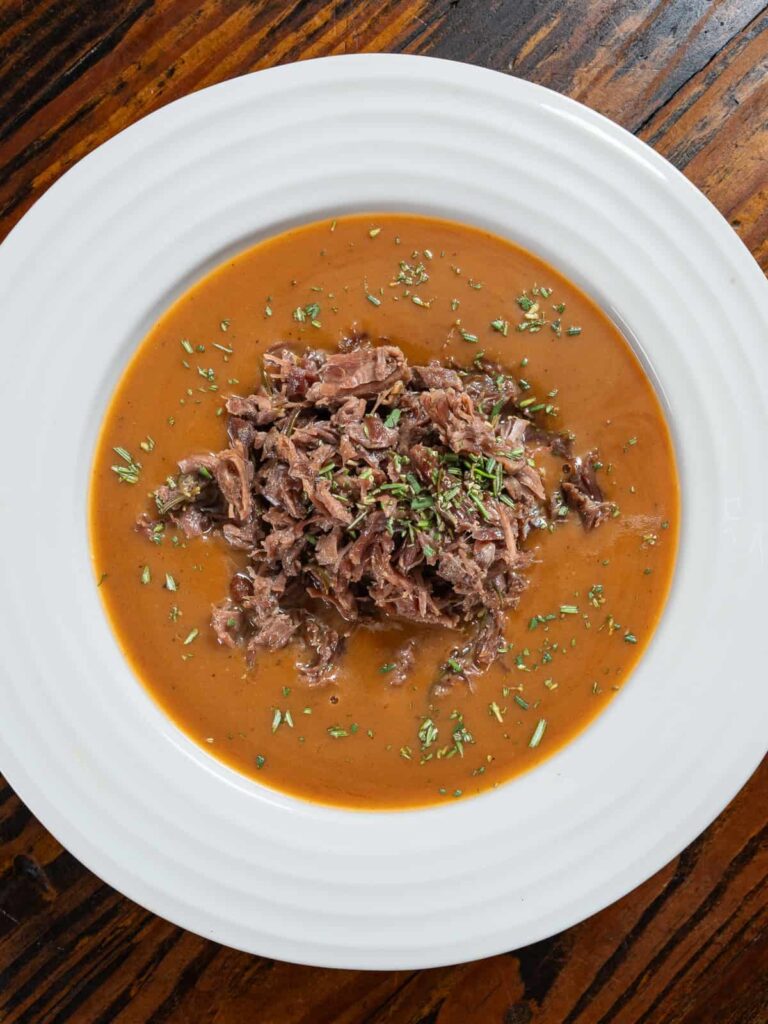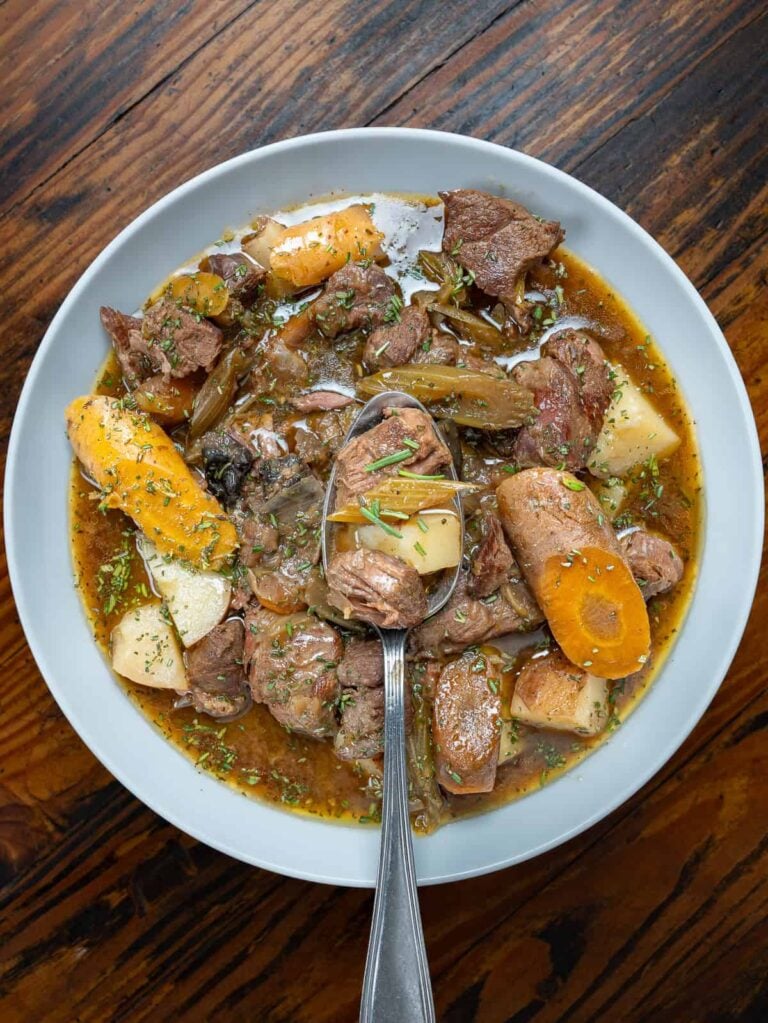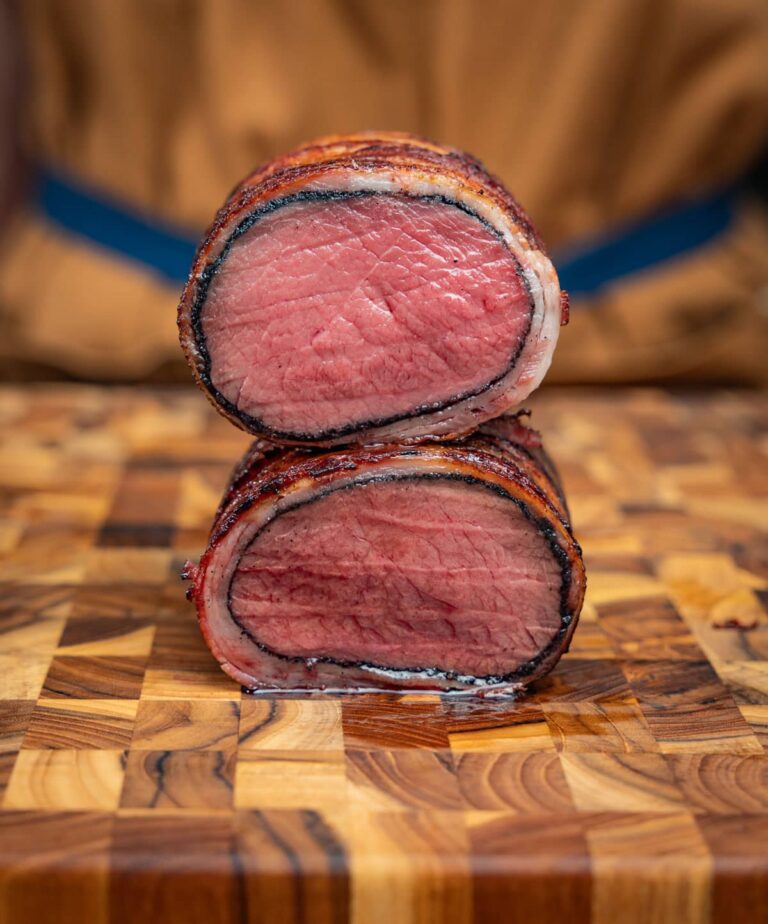

Most Smoked Venison Backstrap comes out dry, and it’s not your fault. A deer’s loin has very little fat, so you have little margin for error. But I’ve found brining it ahead of time fixes that. It seasons the meat all the way through and helps it retain moisture while in the smoker. So you get a beautiful rosy pink color. And it tastes as good cold two days later as it does the day it was made, just like my smoked venison pastrami.

Quick Look: Smoked Venison Backstrap Recipe
- Ready in: Just 30 minutes of hands-on work. + 24 hours to brine, + 12-24 hours to air dry (optional), + 2 hours to cook = 1 1/2 days – 2 days total
- Serves: 6
- Calories: 240
- Main ingredients: Venison backstrap, kosher salt, brown sugar, pink curing salt (optional), juniper berries, garlic, and fresh rosemary, thyme, and sage.
- Cooking method: Brine for one day, dry uncovered on a rack overnight, then smoke at 200°F until it reaches 135°F inside.
- Why this version works: The brine seasons the loin all the way through and helps the meat retain moisture. Air drying creates a tacky surface so the smoke sticks better. This technique gives you a rich colored exterior with a rosy pink interior. Best of all, no searing is needed; it is less prone to drying out and tastes great at room temperature thanks to the brine.
SUMMARIZE & SAVE THIS CONTENT ON
This is one of my favorite venison backstrap recipes to make when I want something that doesn’t require me to stand over a hot stove. I brine one on Thursday, place it in the fridge to dry on Friday, and then smoke it on Saturday. It keeps up to 7 days in the fridge and tastes great chilled or at room temperature. Simply pull it out, slice it, and put it on a board with mustard, pickles, and crackers. I also like to use leftovers for lunch sandwiches and, throughout the week, with a side of runny eggs for breakfast.
From start to finish, this takes three days, but almost all of that is the meat sitting in the refrigerator doing its thing. Your actual hands-on time is about thirty minutes. If you’re looking for something to eat tonight, I’d make my grilled venison backstrap. You can always come back to this one.
As far as the brine, it’s pretty straightforward. It uses simple, flavorful ingredients and a technique similar to Canadian bacon. This gives you smoked backstrap that’s vibrantly red, smoky, salty, herb-forward and slices nicely. It’s juicy and tender and pairs well with just about anything.
Why This Recipe Works
- The brine seasons the meat all the way through. A venison dry rub only flavors the surface. The seasoned wet brine travels into the muscle, infusing it with flavor. It also helps the meat hold onto moisture while cooking in the smoker. This matters a lot with a cut that has almost no fat content.
- The overnight dry is what gets you the best smoke flavor. After the brine, the loin sits uncovered on a rack in the fridge, and the surface dries into a thin, tacky skin (known as the pellicle) so the smoke sticks. Without this, you’re missing out on a lot of the flavor you’re after. I use the same technique on my smoked venison roast after it’s been braised.
- Smoking at low heat. Low steady heat cooks the backstrap evenly, so it’s the same color from edge to center. Smoking at a high temperature also means less time in the smoker, which in turn gives you less smoke flavor.
- It tastes just as good cold by design. Cold food needs more seasoning for the flavors to come through. And as I mentioned earlier, the brine adds extra flavor throughout the meat. It also firms the texture ever so slightly, which makes it more palatable chilled or at room temp.
Notes on Ingredients
See the recipe card for full information on ingredients and quantities.
- Venison backstrap: Trim off the silverskin before you brine. That’s the thin, shiny membrane running along the outside of the loin. Smoke won’t pass through it, and it stays chewy no matter how long you cook it. Save the trimmings for your next pot of venison stock.
- Kosher salt: Use kosher, not table salt. Table salt grains are tiny, so a cup packs far more salt than a cup of kosher salt, meaning you’ll end up with meat that’s too salty to eat. Most table salt also contains iodine and anti-caking agents, which can leave a faint metallic taste in something that soaks this long. Kosher salt is clean-tasting and dissolves easily. For better accuracy, measure by weight. Coarse kosher salt is around 250 grams per cup. A fine-texture sea salt is around 275 grams per cup.
- Pink curing salt (Prague Powder #1): This one is optional, but it does three things. It keeps the meat rosy pink instead of gray, adds a mild ham-like tang, and lets you leave the meat at room temperature a little longer during long dinner parties.
Note: pink curing salt is not the same thing as pink Himalayan salt, so don’t swap one for the other. I also use this to make my smoked venison jerky. - Juniper berries: These are what make venison taste like venison in the best way. They’re piney with a little citrus behind them. Crack them with the flat of a knife before they go in the brine so they release more flavor.
- Black peppercorns: Use whole rather than ground. Ground pepper can sometimes have a dull flavor profile.
- Fresh rosemary, thyme, and sage: Fresh is worth buying for this one. The herbs sit in cold brine, releasing all of their natural flavors and oils from the leaves and stems. Dried herbs have already lost most of those oils. So what’s left comes out tasting muted. Be sure to add the stems as well. They carry a lot of flavor, and they’re easy to remove later.
Substitutions and Additions
- Other venison cuts: A venison eye of round and sirloin tip also work well for smoking. Thicker roasts need a longer brine and will take around an extra hour or so in the smoker. If using an eye of round, I would limit the brining time to 4-6 hours.
- Elk, moose, or antelope: Use the same ingredients and method but swap out the meat. Elk and moose loins run thicker than whitetail, so give them an extra day in the brine, and reaching your desired internal temperature may take longer than you think.
- Swap the juniper for gin: If you can’t find juniper berries, a splash of gin in the brine gets you the same piney note since gin is made from juniper.
- Swap the brown sugar for maple syrup or honey: Either one works in the same amount. Maple gives it a rounder, deeper finish, while honey keeps it lighter without making the meat sweet. You can make the same adjustments with my smoked venison ham.
- Add half of an orange to the brine: Citrus and juniper are a natural pair, and it elevates the flavor profile.
- Skip the pink curing salt: I’ve made this recipe numerous times without pink salt, and it works just fine. You’ll get browner meat instead of pink and a little less tang. You’ll also want to serve it within a couple of hours rather than letting it sit out on a table all evening.
If you love smoking wild game, try my smoked wild boar ribs, smoked goose breast, and smoked duck breast next!
How To Make Smoked Venison Backstrap
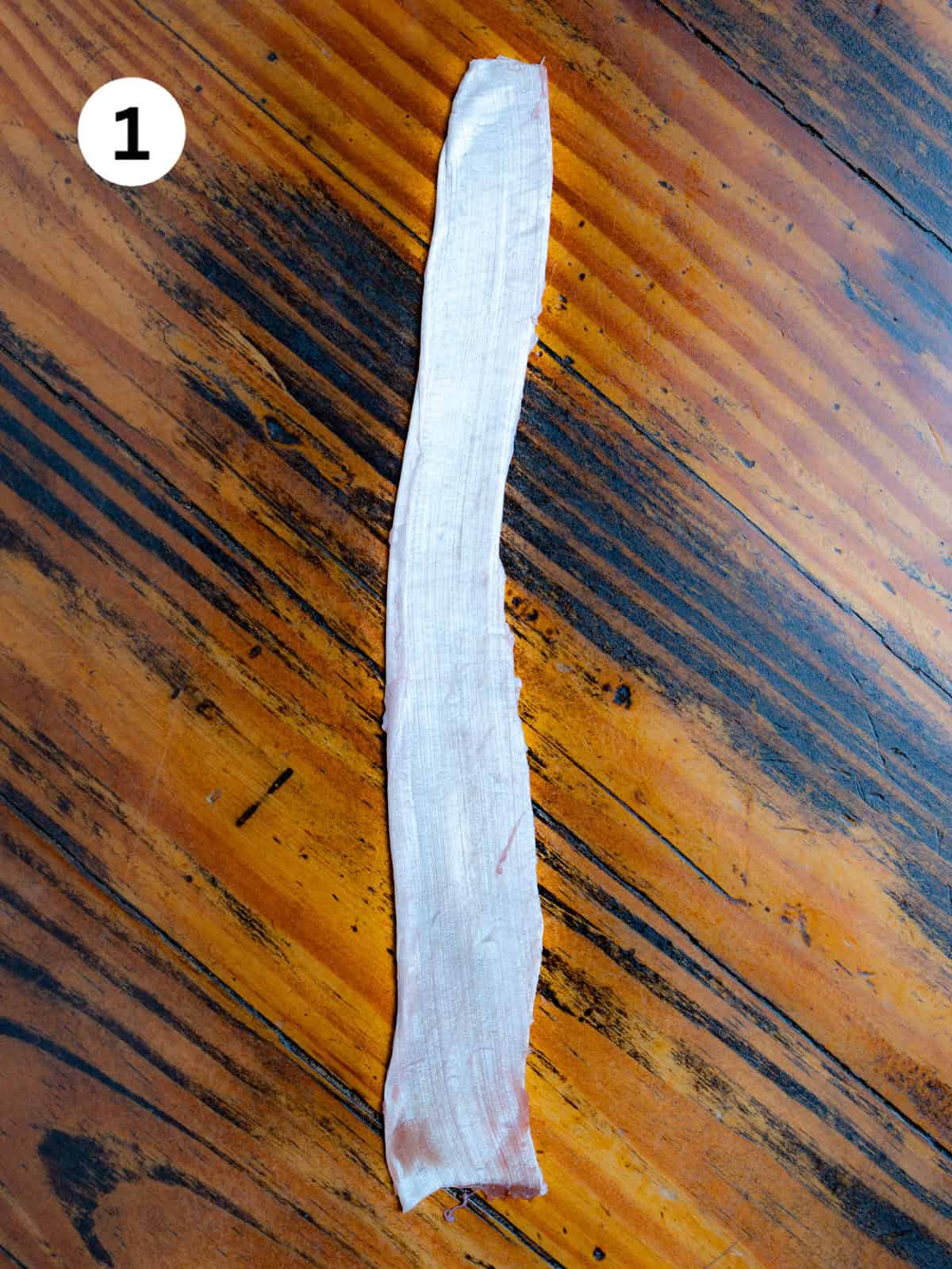
1. Prep the backstrap. Start by trimming and removing any silver skin from the meat.
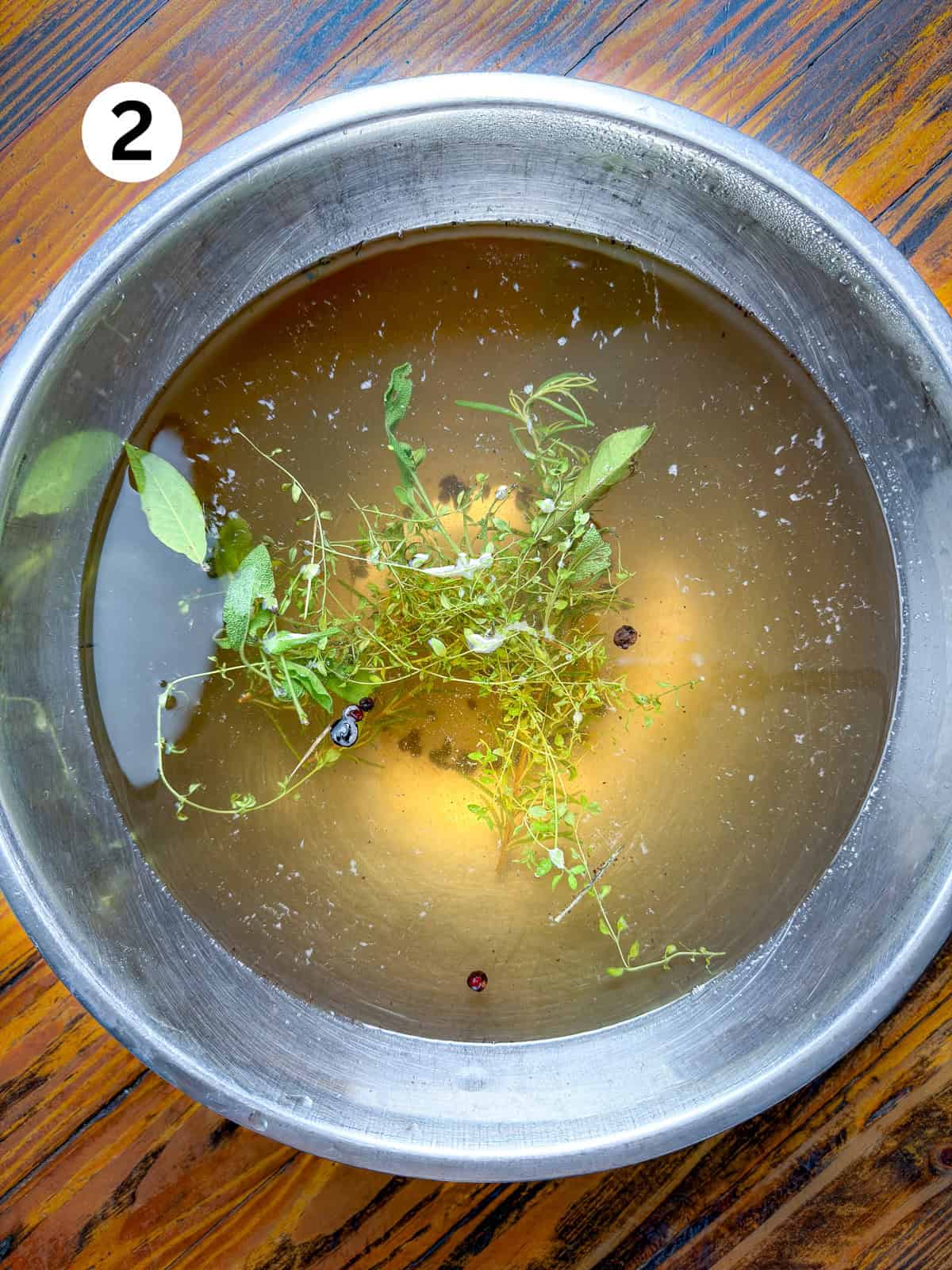
2. Make the smoked venison backstrap brine. Combine all of the ingredients except the venison loin and black pepper in a large pot. Bring the mixture to a simmer, stirring occasionally, until the salt and sugar have completely dissolved.
When ready, remove from the heat and refrigerate until completely chilled.
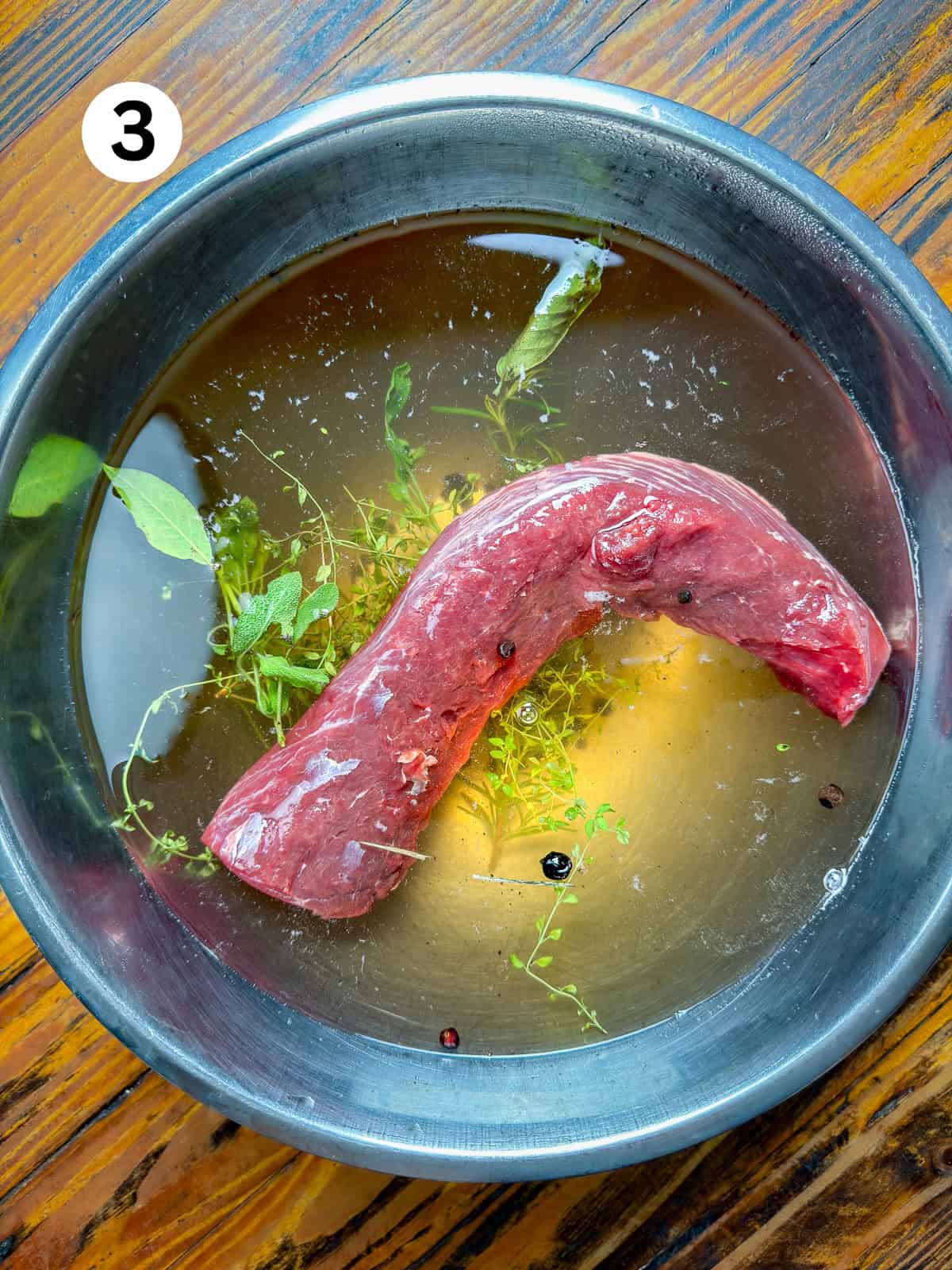
3. Brine the venison. Add the venison loin to the brine. Add a plate or bag of water on top of the meat to keep it fully submerged. Refrigerate for 24 to 48 hours.
When ready, remove the loin from the brine and rinse it under cold water. Pat the meat really dry before it goes in the smoker. Smoke sticks to a dry surface. On a wet one, it just beads up and rolls off, so you end up with pale meat and barely any smoke flavor.
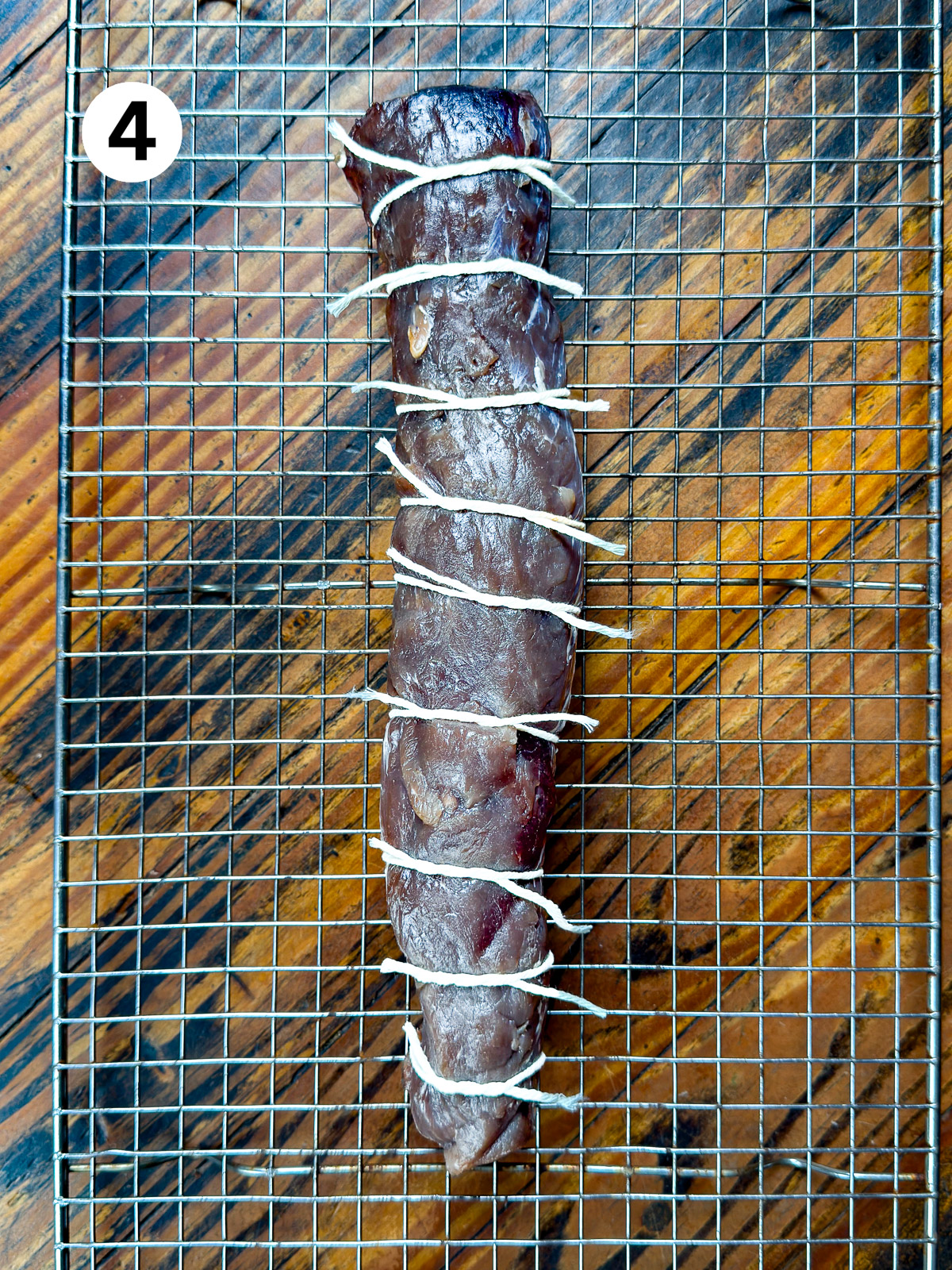
4. Air dry in the refrigerator. Lightly dust the loin with a little ground black pepper. Place the loin on a wire rack sitting over a baking tray and refrigerate it uncovered for 12 to 24 hours.
This gives the salt time to spread evenly through the meat, and it dries the surface until it feels tacky so the smoke sticks to the skin.
Notice that I tied the meat with butcher’s twine for even cooking. For more info, see the chef’s tips section.
Brine Temperature Tip: Get the brine completely cold (40°F or under) before the backstrap goes in. Warm brine is a food-safety problem. The salt goes to work faster in warm liquid. So the outside of the loin over-seasons before the center gets seasoned at all.
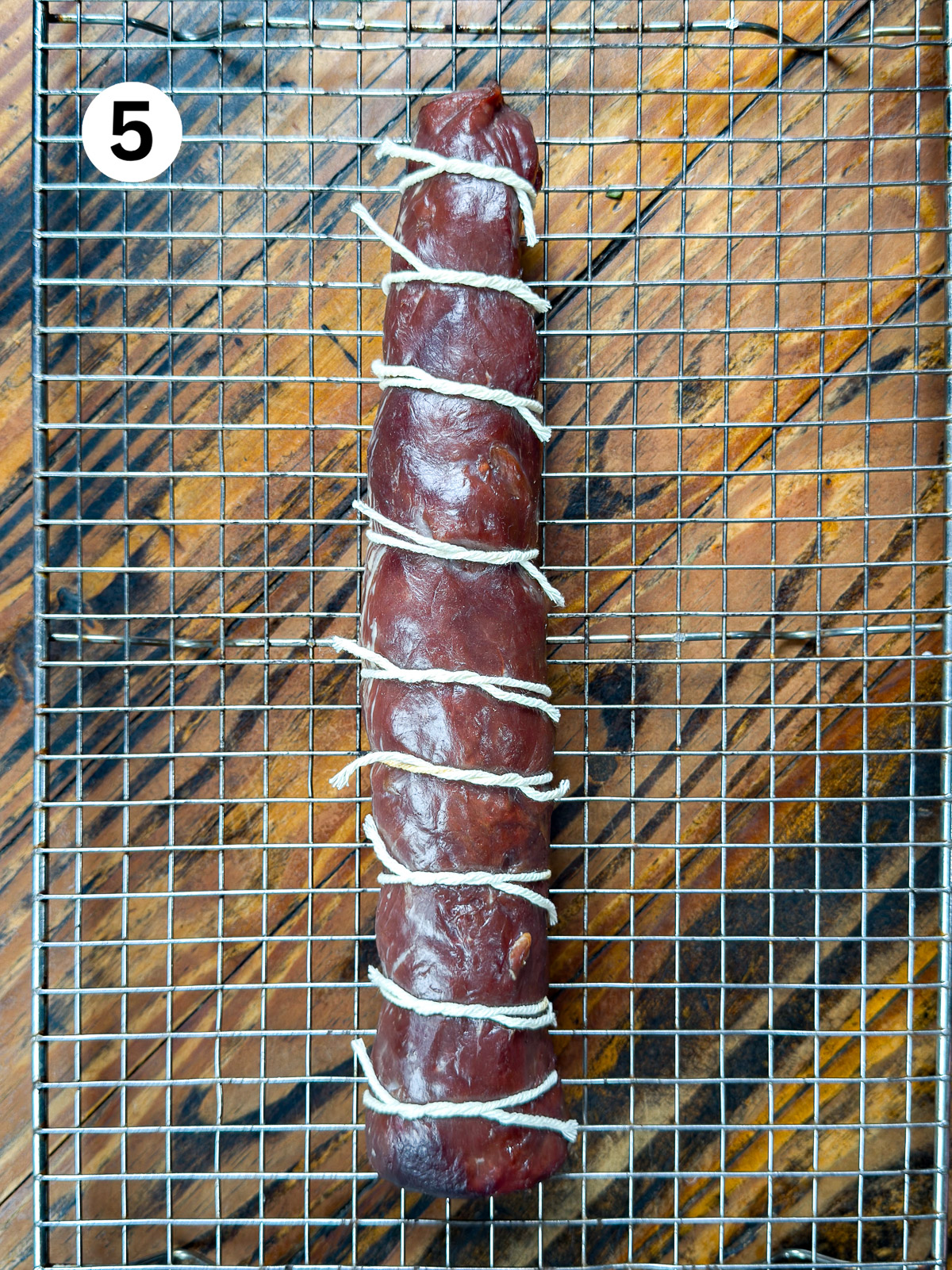
5. Smoke the backstrap. Start your smoker at 200°F, and as soon as it starts to smoke, add the venison backstrap to the smoker’s grill grates. Smoke the venison until you reach your preferred internal temperature by checking it with a good-quality meat thermometer.
I recommend cooking until the meat is around 135°F internal temperature. A small backstrap from a young deer may take about 1 1/2 hours, while a larger backstrap from a mature deer may take up to 3 hours.
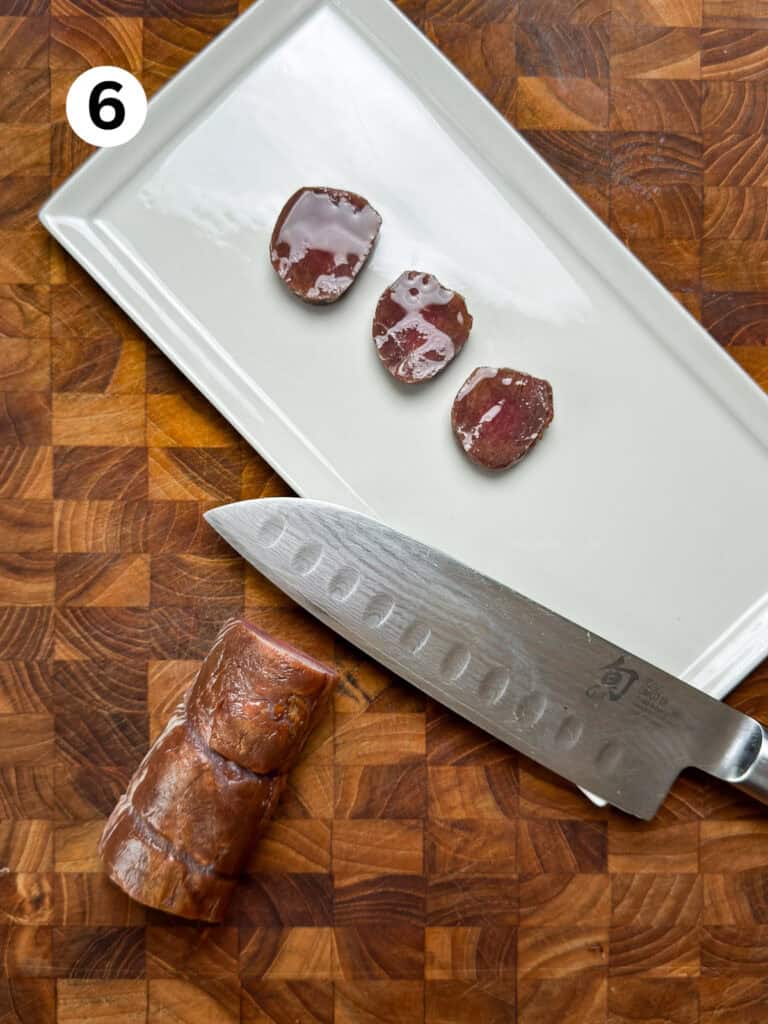
6. Rest and slice. Remove the venison loin from the smoker and let it rest uncovered at room temperature for 20-30 minutes. After it’s rested, slice it thinly across the grain. I like to brush the meat with olive oil and serve it up with homemade dinner rolls for dinner parties.
Venison Backstrap Internal Temperature
Most venison advice says to pull at 130°F, and that’s right for a steak you’re eating hot off the grill. This one is different. The brine holds moisture in the meat, so it stays juicy a few degrees further than an unbrined loin would. That extra firmness is what lets you slice it thin without it tearing, and it’s what makes it just as good cold the next day.
| Doneness | Pull at | After resting | What you get |
|---|---|---|---|
| Medium rare | 125°F | 130°F | Red center, tender. Great for grilled backstrap, a little soft for slicing thin. |
| Medium (recommended) | 135°F | 138–140°F | Rosy pink through the middle, firm enough to slice cleanly while still juicy. |
| Medium well | 145°F | 150°F | Light pink fading to gray. Noticeably drier. |
Use a thermometer, not a timer. Backstraps taper from one end to the other, so the thin end finishes well before the thick end. Put the probe in the thickest part, right in the center, and don’t let it touch the rack. If the thin tail end is running ahead, either tuck it under and tie it or pull that section early.
Chef Tips & Troubleshooting
- Brine longer for charcuterie boards. For a loin with a more cured feel and texture, increase the brine time to 48 hours. It will be a little firmer and saltier, somewhat similar to my salt cured venison backstrap. Perfect to pair with traditional charcuterie sides like sliced cheese, mustard, pickled vegetables, and pickled quail eggs.
- Tie with butcher’s twine for even cooking. Backstraps tend to be shaped pretty flat. Tying them horizontally at 2-inch intervals with butcher’s twine will give them a rounder shape. This not only promotes even cooking but also increases the center mass.
More center mass lets the loin stay on the smoker longer before reaching the final internal temperature. And more time in the smoker means more flavor. I’ve included a picture below this section showing how I tie them. - Smoke low and steady. Hold the smoker between 190°F and 200°F. Lean meat has no fat to protect it, so a hot smoker cooks the outside well past done before the center catches up. You end up with a thick gray ring under the crust and a small pink middle. Low heat lets the whole loin cook evenly.
- Trust the thermometer, not the clock. A 2-pound whitetail loin usually takes 2 to 3 hours, but thickness drives the time, not weight. A short fat loin takes longer than a long thin one of the same weight. Start checking with a thermometer at the 90-minute mark.
- Watch the thin end. Backstraps taper, and the narrow tail finishes 15 to 20 minutes ahead of the thick end. You can tuck it under and tie it with butcher’s twine so the loin is an even thickness, or just cut that section off when it hits temperature and let the rest keep going.
- Don’t cook past 135°F. This is the one number that matters most. Above that, the muscle fibers squeeze out the moisture the brine spent two days putting in, and the meat turns dry and chewy since there’s no fat to save it.
- Slice thin and against the grain. A quarter inch or thinner. Look at the meat and find the direction the muscle fibers run, then cut across them. That shortens the fibers so they give easily when you bite. Cut with the grain and even a perfectly cooked loin chews like a rubber band.
- Serving it to a crowd. If you want to follow the USDA guidelines, then this backstrap can safely sit out for about 2 hours at room temp. If the temp is above 90°F, eat it within 1 hour. After that, put it back in the fridge. For a longer party, put out the smoked venison backstrap in small amounts and keep the rest in the refrigerator until you need to refill.
If your freezer is full of more venison backstrap, try my pan fried backstrap or venison backstrap Wellington next.
Storage and Reheating
- Storing Leftovers: Wrap the smoked backstrap up tightly and store it in the refrigerator for up to 7 days. It holds this long because the salt from the brine is still doing its job. A plain grilled backstrap won’t last half that long. You can also freeze it for up to 3 months.
- Reheating. This smoked backstrap is meant to be served cold or at room temperature. If you want it warm, set the slices in a low oven for a few minutes and pull them out as soon as they’re warm to the touch.
Smoked Venison Backstrap FAQs
Is venison backstrap the same as tenderloin?
No, they’re two different cuts. The backstrap, also called the loin, runs along the top of the back on either side of the spine. There are two of them, and they’re long and thick. The tenderloins sit underneath, tucked against the backbone inside the body cavity. They’re much smaller, and they’re the cut that matches a beef filet mignon.
The mix-up is easy to understand, since a big backstrap off a mature deer can look about the same size as a whole beef tenderloin. Both cuts are excellent. They’re just not the same thing, and the tenderloins cook much faster.
What is the best wood for smoking venison?
Pecan, apple, or cherry are my top choices. Venison is lean and picks up smoke fast, so a milder wood gives you flavor without taking over. Hickory and oak work well too if you want something bolder. Skip mesquite; it’s too heavy for this cut and turns bitter. For best results, aim for a thin haze off the stack, not thick white smoke.
Why is my smoked venison backstrap tough or dry?
The reason smoked backstrap is tough or dry is almost always because the internal temperature went above 135°F. Above that, the muscle fibers tighten and squeeze out moisture, and venison has no fat to fall back on. Pull it the moment it hits temperature and remember it climbs a few more degrees while it rests, so plan for that.
Why doesn’t my brined venison taste smoky?
This likely happened because the surface was still damp when it went in the smoker. Smoke sticks to dry meat and beads off wet meat, so a loin that goes on wet comes out pale with very little flavor. Dry it well after the rinse and give it the full overnight rest uncovered in the fridge before it sees smoke.
Why is my smoked venison Loin too salty?
This issue is usually one of two things. Either you used table salt instead of kosher, which packs far more salt into the same measure, or the loin sat in the brine too long. Backstrap is thin and takes salt quickly, so 24 hours is the recommended brine length, with 48 hours being the maximum. Also be sure to rinse it well when it comes out of the brine.
How long does it take to smoke a venison backstrap?
It can take anywhere from about 1.5 to 3 hours at 200°F. A backstrap off a young deer runs thin and can be done in an hour and a half. A thick loin off a mature buck can take the full 3 hours. Thickness is what drives the time, not length, so start checking early and go by the thermometer. Pull it at 135°F.
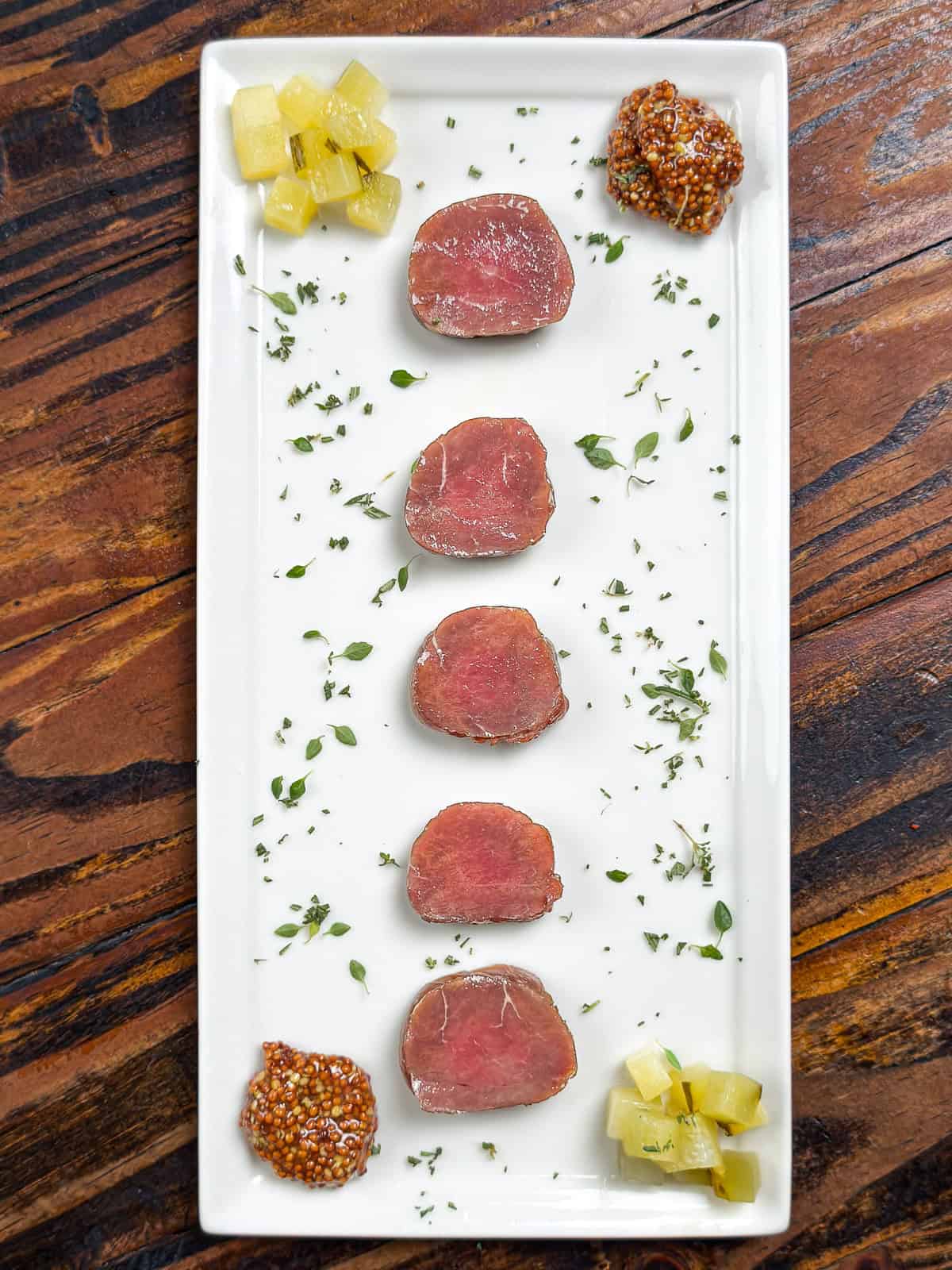
Notice the color on the backstrap in the picture above. It’s a couple of shades lighter than the backstrap that’s in the image at the top of the page. This is due to differences in brining time. The one above was brined for 24 hours, and the backstrap at the top of the page was brined for 48 hours.
What to serve with Smoked Deer Backstrap
- The smoked loins are best served sliced thinly across the grain, no more than 1/4 inch thick. While you can serve this meat hot, it’s best served at room temperature or slightly warm.
- It goes well with a variety of sauces including different types of mustard, hollandaise, bearnaise, horseradish cream sauce, and mayonnaise-based sauces such as Alabama white sauce.
- You can even throw them on a crispy cracker topped off with your favorite slice of cheese (I won’t tell anybody) or on a sliced roll with a side of summer squash slaw.
- For dinner: If I’m serving this during the holidays, my main choice for a side dish is potato and mushroom gratin.
More Backstrap Recipes

Tried this Recipe? Please leave a ⭐⭐⭐⭐⭐ rating in the recipe card below and leave a comment. I love to hear from readers! And if you have any cooking questions or want to share your latest food photos, give me a shout on Instagram at @larry__white.
Smoked Venison Backstrap
Ingredients
For the Venison
- 1 venison backstrap (Silver skin removed)
- 1/2 teaspoon ground black pepper
For the Brine
- 1 gallon water
- 1 ½ cups kosher salt
- 1 cup sugar
- 2 tablespoons + 2 teaspoons pink curing salt (42 grams)
- 1 teaspoon juniper berries, (crushed)
- 1 bunch fresh sage
- 1 bunch fresh thyme
- 2 sprigs fresh rosemary
- 1 bay leaf
- 2 garlic cloves, (crushed)
- 1 teaspoon black peppercorns
For Smoking
- Wood Chips or Pellets (hickory, oak, pecan or fruit woods are good options)
Instructions
- Trim the meat: Trim and remove any silver skin.
- Make the brine. In a large pot add all of the brine ingredients. Don't add the venison loin or ground black pepper. Bring the mixture to a simmer and stir until the salt and sugar have completely dissolved.
- Chill the Brine. Place the brine in the refrigerator until it has thoroughly chilled.
- Brine the meat. Add the venison loin to the brine. Place a plate on top of the meat if needed to keep it fully submerged. Refrigerate for 24 hours.
- Rinse the meat. Remove the loin from the brine and rinse it under cold water. Dry the loin off with paper towels until no moisture appears on the surface of the meat.
- Air dry in the refrigerator. Lightly dust the loin with a little ground black pepper. Place the loin on a wire rack that is sitting over a baking tray. Place the tray in the refrigerator uncovered for 12 to 24 hours. This allows for the brine to evenly distribute throughout the meat and for it to develop a tacky surface for the smoke to better adhere.
- Smoke the meat. Start the smoker and once it smokes, place the meat on your smoker's grill grates and smoke the deer loin at 200 degrees F. Smoke until you reach your preferred internal temperature by checking it with a good quality meat thermometer. Again, I recommend cooking to around a 135-degree internal temperature. This should take 1 ½ – 3 hours depending on the size of the backstrap.
- Rest and slice. Let the loin rest at room temperature between 20 and 30 minutes before slicing thinly across the grain. If stored properly It will keep in the refrigerator for about 7 days.
NOTES
- Want a more traditional smoked backstrap? Reduce the brine time to 12 hours and remove the pink salt.
- Want a backstrap for the charcuterie board? Increase the brine time to 48 hours. The meat will turn a darker, richer red. It will also be a bit firmer and saltier, which makes it perfect for eating at room temperature.
- Tie for even cooking. For even cooking, tie the loin at 2-inch intervals with butcher’s twine. See my chef’s tips section and “how to” instructions for more info.
- Dry it overnight before smoking. After brining, rinse the loin, dry it very well, dust it lightly with black pepper, and refrigerate it uncovered on a rack for 12 to 24 hours. That step helps the brine even out and gives the surface a tacky finish that takes smoke better.
- Do not cook past 135 F. Venison loin gets dry and chewy above that point, so pull it at your preferred doneness and keep it in the rare to medium-rare range for the best texture.
- Rest before slicing thin. Let it rest at room temperature for 20 to 30 minutes, then slice it thinly across the grain, no thicker than about 1/4 inch.
- Keep leftovers refrigerated. Stored properly, it keeps in the refrigerator for about 7 days.
Nutrition
Nutrition information is automatically calculated, so should only be used as an approximation. Nutrition is per serving.